When choosing restaurant disposables food truck operators should focus on durable, space-efficient, and eco-friendly materials that accommodate their specific menu and storage constraints. Prioritizing high-quality containers and sustainable cutlery helps balance operational costs while meeting the growing consumer demand for environmentally conscious packaging.
Operating a food truck in the competitive Utah culinary scene means mastering more than just your signature recipes. You face the constant struggle of balancing high volume service with incredibly tight storage quarters, all while ensuring your food arrives in your customer's hands exactly as intended. Choosing the right disposables is not merely a line item on your expense sheet; it is a critical component of your brand identity and operational efficiency. In this guide, we will explore how to navigate these unique demands by selecting materials that complement your specific menu and maximize your limited footprint. From evaluating the trade-offs between eco-friendly and traditional containers to avoiding common packaging pitfalls, you will learn how to streamline your supplies without compromising on quality or budget. Let us help you find the perfect balance for your mobile kitchen through expert industry insights.
Understanding the Unique Demands of Food Truck Disposables
For a mobile food vendor, every transaction is a takeout order. Unlike traditional restaurants that rely on reusable dishware, a food truck consumes packaging with every sale. This makes essential equipment and disposables more than just overhead; they are the literal vehicle for your product. When every plate, fork, and napkin leaves the window, your choice of packaging directly impacts your profit margins. If a container is too expensive, it eats your margin; if it is too flimsy, it ruins the customer experience.
Carefully choosing restaurant disposables food truck owners can trust requires balancing durability with unit cost. In Juab County and throughout rural Utah, the challenge is amplified by the need for responsive supply chain support. You cannot always rely on national warehouses when you need immediate replenishment to meet a busy weekend rush. Juab Restaurant Supply serves as a dedicated partner for local operators, providing the logistical reliability needed to keep your truck running. We understand that in a fast-paced mobile environment, a delay in supply is a delay in service. You can contact us for product availability to ensure your inventory remains stocked and your operational costs stay predictable.
The Food Truck Challenge: Navigating Tight Storage and High Volume
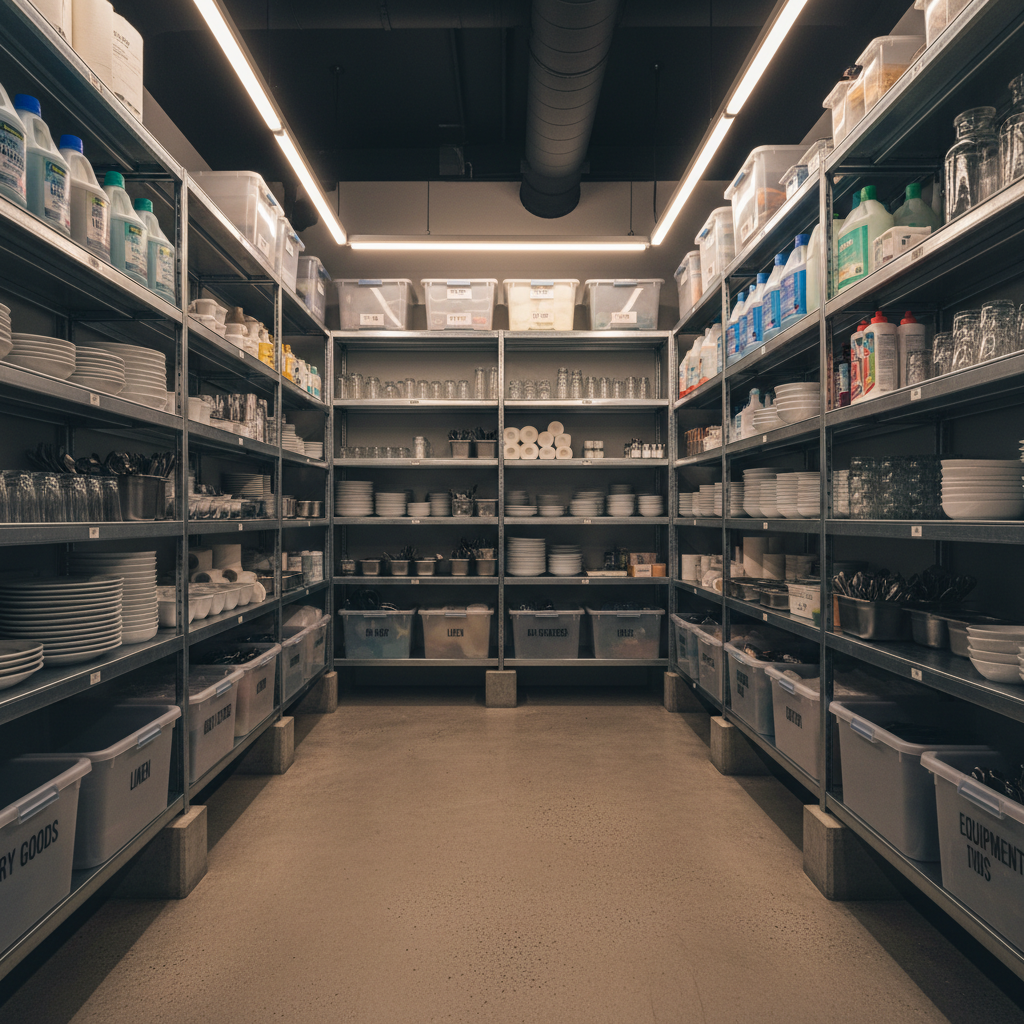
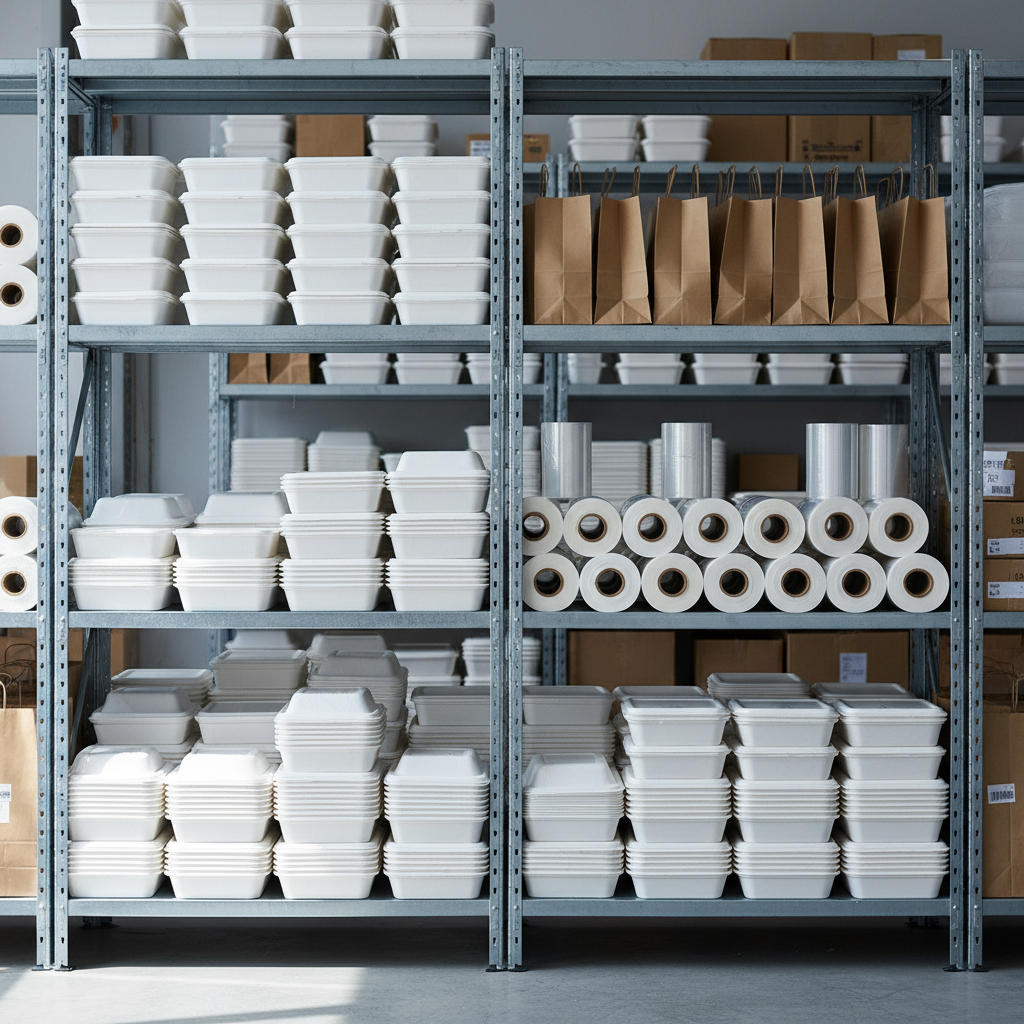
Space is the ultimate premium in a mobile kitchen. While a brick and mortar restaurant might have a dedicated dry storage room, a food truck operator often works within the constraints of a few overhead shelves and under-counter cabinets. Efficiently choosing restaurant disposables food truck owners can actually fit into these tight quarters requires a focus on nesting capability. High-quality nested containers are designed to sit deep within one another, allowing you to store a case of 500 units in the same footprint that might only hold 100 non-nesting boxes.
Maximize your shelf space by adopting a cross-functional inventory strategy. Instead of sourcing a unique container for every menu item, select a versatile size that accommodates multiple dishes. A deep 16-ounce kraft bowl might serve equally well for a side of street corn, a small salad, or a portion of loaded nachos. This reduction in SKU count simplifies your workflow and frees up space for essential equipment and disposables that are critical for daily operations.
Relying on a local, responsive supply chain support system in Juab County is the most effective way to manage these volume challenges. When ordering from national distributors, the pressure to buy in massive bulk to offset shipping costs often leads to overstocking your truck or storage area. By partnering with a regional supplier, you can maintain a leaner inventory. Quick replenishment cycles mean you can contact us for product availability and receive what you need for the weekend rush without turning your limited workspace into a warehouse.
Matching Container Materials to Your Utah Menu
Selecting the right material involves more than just aesthetics; it is a technical decision based on your specific menu and the harsh Utah environment. For high-grease items such as loaded fries, brisket, or burgers, porous materials lead to soak-through, which compromises the container's structural integrity and ruins the customer experience. In these cases, you should prioritize clay-coated paperboard or heavy-duty plastic that provides a reliable grease barrier. For fried items like wings or churros, breathability is the priority. Using a non-vented plastic container traps steam, quickly turning crispy textures soggy. Vented essential equipment and disposables are necessary to allow moisture to escape while maintaining heat.
Utah’s climate introduces unique variables that national distributors often overlook. During winter in Juab County, standard plastic containers can become brittle and snap when handled in the cold. If your business operates year-round, consider thick kraft paper or insulated foam for better heat retention and durability in sub-freezing temperatures. In the peak of summer, the heat inside a stationary food truck can exceed 100 degrees, causing lower-grade plastics to warp or nest so tightly they become impossible to separate during a rush.
Material Type | Best For | Temperature Performance | Grease Resistance |
|---|---|---|---|
Coated Paperboard | Burgers, Fries | Good for short-term heat | High |
Vented Plastic | Salads, Hot Pasta | Prone to warping in high heat | Excellent |
Thick Kraft Paper | Warm Bowls, Fried Food | Superior heat retention | Moderate |
Insulated Foam | Hot Soups, Entrees | Best for cold Utah winters | High |
By matching materials to your menu's moisture and fat content, you ensure the food reaches the customer in the intended state. If you are uncertain how a specific material will react to your hottest or greasiest dish, you can contact us for product availability to request samples for real-world testing. This level of responsive supply chain support ensures that when choosing restaurant disposables food truck owners are making an informed investment rather than a guess. Building a reliable inventory around these material requirements is essential for maintaining product quality from the window to the table.
Eco-Friendly vs. Traditional Disposables: Balancing Brand and Budget
The decision between traditional plastics and sustainable materials often comes down to a choice between price point and brand positioning. While the demand for eco-friendly packaging is rising, operators must distinguish between recyclable and compostable labels. In a food truck environment, standard plastic or paper containers marked as recyclable are often rendered unrecyclable the moment they touch grease or sauce. Recycling facilities generally reject items contaminated by food residue. Compostable options, like bagasse or PLA, are designed to be processed alongside food waste, making them a more legitimate green choice for messy menus.
When choosing restaurant disposables food truck owners must weigh these environmental benefits against higher unit costs. Sustainable products frequently carry a premium that can impact thin margins. For many Utah-based operators, particularly those in Juab County and surrounding areas, the durability of the container is often the primary concern for the customer. A compostable straw that gets soggy in ten minutes or a plant-based lid that does not seal tightly can frustrate customers more than a non-recyclable alternative would.
Feature | Traditional (Plastic/Styrofoam) | Eco-Friendly (PLA/Bagasse) |
|---|---|---|
Unit Cost | Lowest | Higher (20-50% more) |
Heat Tolerance | High (Material dependent) | Varies; PLA can melt in heat |
Food Residue | Prevents recycling | Usually compostable |
Structural Integrity | High | Can be lower in wet conditions |
Integrating these choices into your business requires responsive supply chain support to ensure you are not overpaying for features your customers do not prioritize. If your brand is built on sustainability, the investment in essential equipment and disposables that are certified compostable is a logical marketing expense. However, if your focus is on providing the most value to local diners, high-performance traditional materials might be the more practical path. You can contact us for product availability to compare samples and see how various eco-friendly options hold up against your heaviest menu items.
Essential Checklist: Beyond the Takeout Box
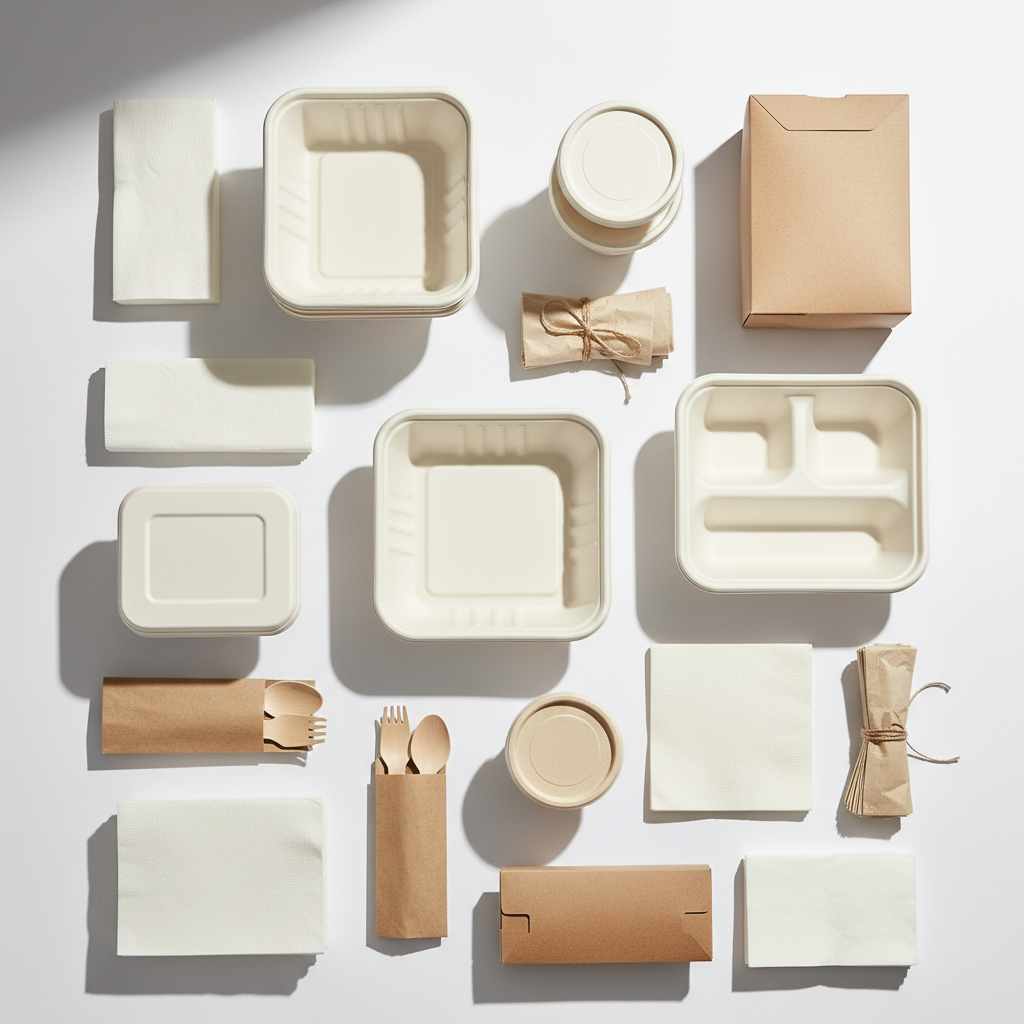
While the main container holds the meal, the accompanying accessories define the ease of use for the customer. Beyond the primary box, choosing restaurant disposables food truck owners rely on daily involves a checklist of essential support items that impact both overhead and sanitation. Overlooking these details can lead to messy service windows and frustrated diners.
Napkin selection is a prime example of where quality reduces cost. Low-grade, single-ply napkins often lead customers to grab a thick stack to handle a single burger. By investing in high-absorbency, two-ply napkins designed for specific dispensers, you encourage single-dispense usage. This reduces total volume consumed and keeps your service area cleaner. Similarly, the choice between wrapped and unwrapped cutlery involves balancing speed with food safety. In the dusty or windy environments common in Juab County, pre-wrapped kits ensure that forks and spoons remain sanitary until the moment of use.
Item | Practical Consideration | Operational Benefit |
|---|---|---|
Dispenser Napkins | Single-pull design | Reduces waste and floor litter |
Wrapped Cutlery | Protection from elements | Enhances perceived sanitation |
Condiment Cups | Secure lid fitment | Prevents bag leaks and portion loss |
T-Shirt Bags | High tensile strength | Safely carries multiple heavy containers |
Small details like vented lids for condiment cups or high-strength carry-out bags prevent the common failure points of mobile service. Our catalog includes these essential equipment and disposables alongside the back-of-house necessities required to prep your menu. To ensure your inventory matches your weekend volume, you can contact us for product availability and receive responsive supply chain support tailored to your specific Utah location.
Avoiding Common Food Truck Packaging Mistakes
Packaging errors often stem from purchasing based on price alone without verifying real-world performance. One of the most frequent failures is the "leaky lid." A lid that fits loosely or pops off under the weight of a stacked bag results in messy spills and lost revenue. Before committing to a bulk order, you should always test the seal with your specific sauces or liquids to ensure it remains secure under pressure.
Sizing is another critical area where operators often stumble. Choosing an oversized container can inadvertently make your portions look small, even if the weight is correct, which leads to customer dissatisfaction regarding value. Furthermore, you must consider the "customer walk." This refers to how your food holds up during the ten minute journey from your window to an office or home. Condensation can turn a crisp taco shell into a soggy mess if the container lacks proper ventilation. By choosing restaurant disposables food truck owners have vetted through hands-on testing, you protect your brand's reputation. At Juab Restaurant Supply, we provide responsive supply chain support and encourage operators to contact us for product availability to request samples. Testing essential equipment and disposables with your actual menu items is the only way to ensure quality remains consistent from service to consumption.
The Local Advantage: Why Juab Restaurant Supply Matters
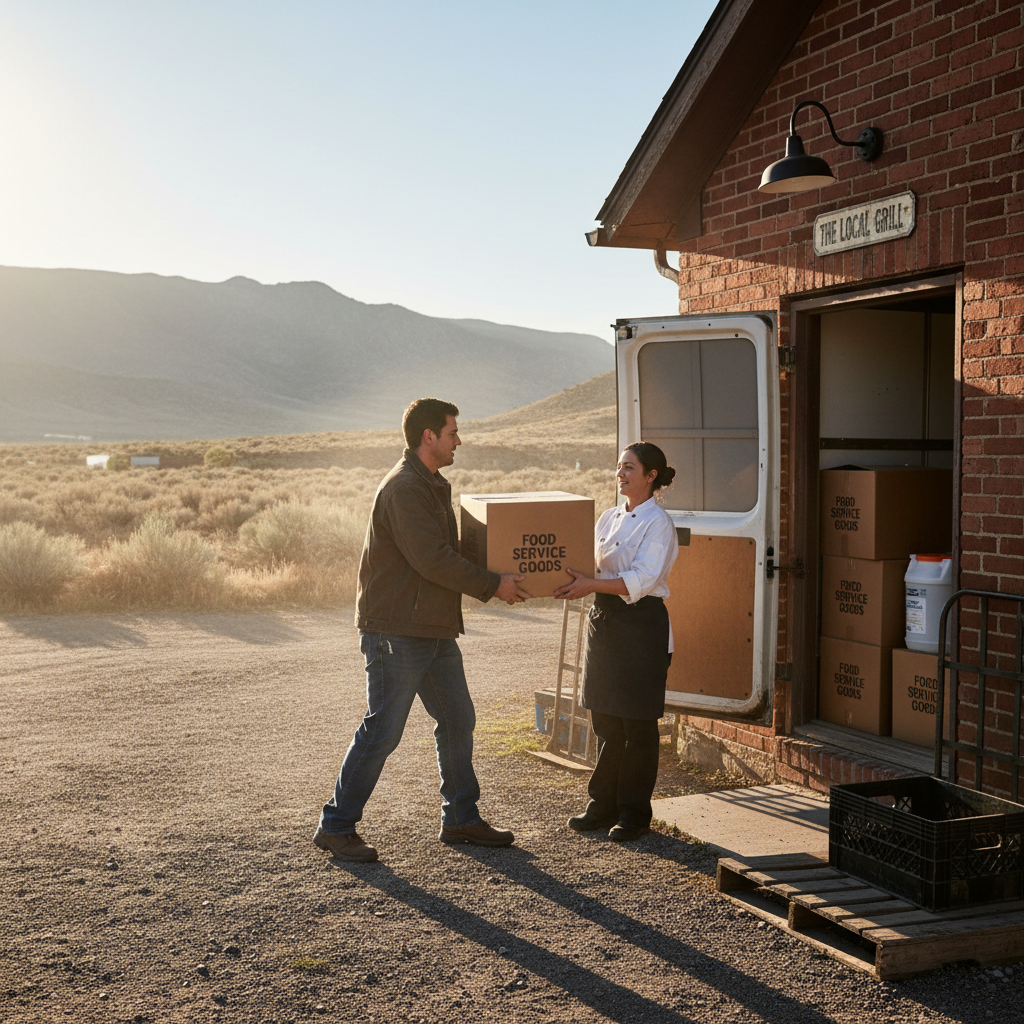
Success for a mobile kitchen depends as much on the logistics of the supply chain as it does on the quality of the food. While national distributors may offer lower base prices on paper, the shipping fees and transit times to central Utah can be prohibitive for small businesses. Choosing restaurant disposables food truck operators in Juab County actually benefit from requires a partner who can provide immediate responsive supply chain support.
We prioritize dependable availability to ensure you never have to turn away a customer due to a lack of containers. By stocking essential equipment and disposables locally, we help you avoid the pitfalls of over-ordering and the stress of delayed shipments. Please contact us for product availability to see how our operational assistance can help you maintain consistency and productivity.
Finding the right balance between cost, durability, and sustainability is the key to mastering your disposable strategy. These small details ultimately shape how customers perceive your food truck or cafe. If you want expert help choosing the most effective supplies for your specific menu, our team is here to support your goals. You can browse our wide range of Products to find the best fit for your daily operations. We are happy to assist you in making informed decisions that help your business thrive.