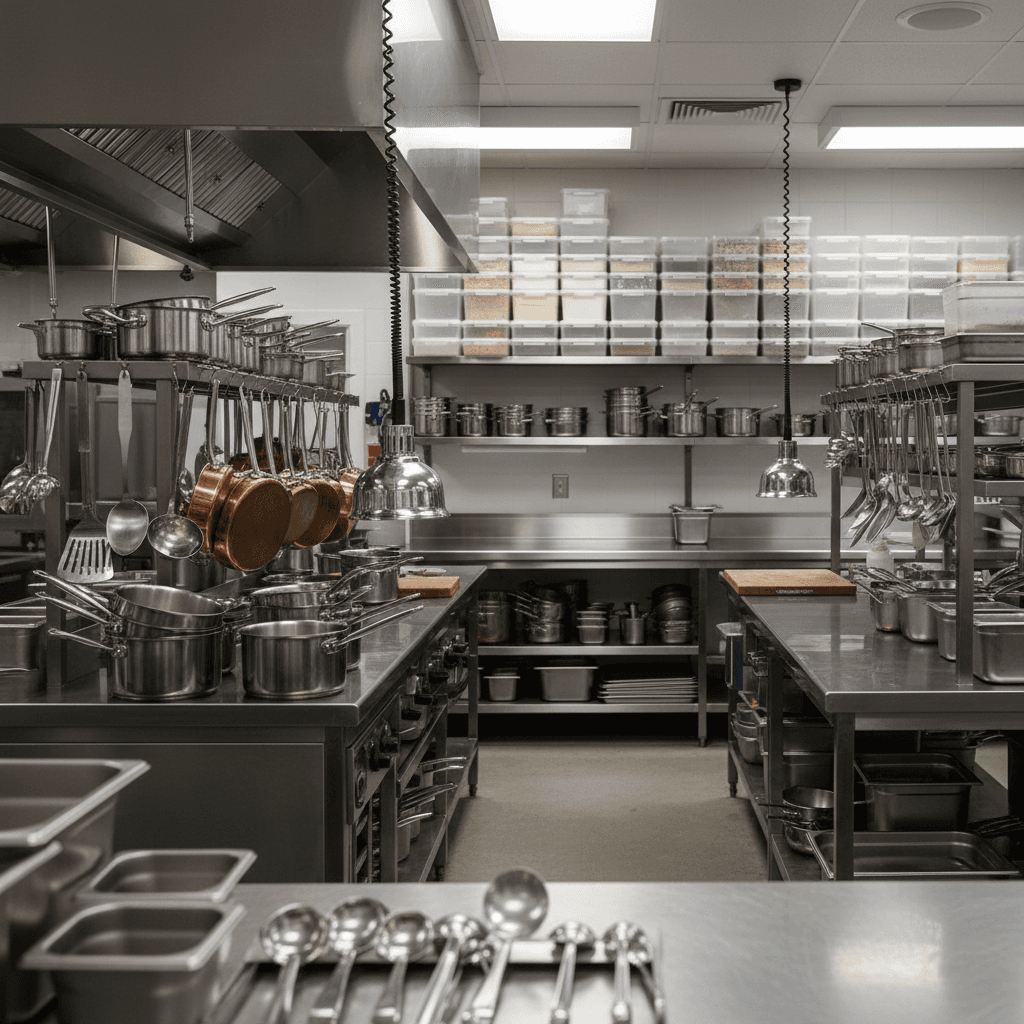
Essential food safety supplies for commercial kitchen operations include precise thermometers, food rotation labels, and color-coded cutting boards to prevent cross-contamination. Proper sanitation tools like high-quality disinfectants, disposable gloves, and specialized cooling paddles are also critical for maintaining health department standards. Investing in these tools ensures that staff can effectively monitor temperatures and practice rigorous hygiene during every shift.
A single lapse in your food safety protocol can compromise years of reputation building and invite unwanted regulatory scrutiny. For commercial kitchen operators, the challenge lies in maintaining rigorous standards amidst the daily chaos of high volume service. It is not merely about passing a health inspection; it is about establishing a foundation of trust with every plate served. Achieving this requires a strategic inventory of professional grade tools designed for precision and durability. In this guide, we explore the essential supplies necessary to safeguard your operations, including temperature monitoring systems, color coded storage, and sanitation essentials. You will learn how to build a comprehensive HACCP compliant inventory that streamlines workflow while ensuring maximum safety. From personal hygiene barriers to precise rotation labeling, we provide the practical expertise you need to keep your kitchen running flawlessly.
Why Food Safety Supplies are the Foundation of Your Kitchen Operations
For any food service operator in Utah, a health inspection is a high-stakes event, but the true value of maintaining rigorous standards goes far beyond compliance. Investing in the right food safety supplies for commercial kitchen environments is a fundamental business protection strategy. When a kitchen lacks proper monitoring tools or barrier protection, the risk of a foodborne illness outbreak increases. Such an event can permanently damage a brand’s reputation and lead to catastrophic financial losses that far outweigh the cost of inventory.
Beyond risk mitigation, these supplies are essential for operational efficiency. Precise temperature tracking and clear rotation systems prevent the unnecessary waste of high-value inventory. If a walk-in cooler fluctuates and there is no calibrated thermometer to verify the duration, thousands of dollars in product might be discarded to ensure safety. Reliable commercial kitchen supplies provide the data needed to make informed decisions rather than guessing.
To maintain these standards, we utilize the 5 C’s of Food Safety as a framework for operational success:
Cleaning: Proper sanitation of surfaces and equipment.
Cooking: Reaching and verifying safe internal temperatures.
Chilling: Rapidly cooling and storing food to avoid the danger zone.
Cross-contamination Prevention: Keeping raw and ready-to-eat foods separate.
Contact: Managing how staff and surfaces interact with ingredients.
Implementing this framework requires responsive supply chain support to ensure essentials like gloves and test strips are always on hand. Get help with your food safety checklist to ensure your operation is prepared for every shift.
Temperature Monitoring and Control, Thermometers and Cooling Paddles
Precision in temperature management is the only way to satisfy Utah health inspectors and ensure the safety of every dish served. Relying on visual cues or "feel" is a liability that invites bacterial growth. Every operation requires a tiered approach to monitoring, starting with high quality commercial kitchen supplies that can withstand a high-volume environment.
First, digital probe thermometers are non-negotiable for verifying the internal temperatures of proteins and cooked dishes. These tools provide the precise data needed for mandatory logs. Second, infrared thermometers allow staff to perform rapid, non-contact surface checks on incoming deliveries or buffet lines without risking cross-contamination. Finally, permanent ambient thermometers must be placed in the warmest zones of all refrigeration units and inside ovens to monitor equipment performance around the clock. In Utah, failing to maintain accurate, up-to-date temperature logs is a frequent cause for inspection deductions.
Chilling hot liquids presents a unique challenge that many operators overlook. Large batches of soups, stocks, and sauces stay in the bacterial "danger zone" (40°F to 140°F) for too long if left to cool naturally in the walk-in. Cooling paddles, also known as ice paddles, are the most effective solution. By filling these durable plastic paddles with water and freezing them, then stirring them directly into hot liquids, you increase the surface area of cold contact. This process rapidly brings the core temperature down to safe levels within the required two-hour and four-hour timeframes. Investing in these specialized food safety supplies for commercial kitchen use prevents the spoilage of expensive inventory.
Maintaining these tools requires responsive supply chain support to replace damaged units or provide backups. If you are uncertain about the specific monitoring requirements for your menu, Get help with your food safety checklist to ensure no critical control point is missed.
Preventing Cross Contamination, Color Coded Systems and Storage

Preventing cross contamination requires more than just awareness; it requires a physical infrastructure that makes the wrong choice difficult to make. Color coded cutting boards and dedicated smallwares are the primary tools for this separation. By assigning specific colors to different food groups, kitchen managers can verify compliance from across the room, ensuring that a knife used for raw poultry never touches a head of lettuce.
Standardized systems typically follow these industry conventions:
Board Color | Food Category |
|---|---|
Red | Raw Red Meat |
Yellow | Raw Poultry |
Blue | Raw Fish and Seafood |
Green | Produce and Fruits |
White | Dairy and Bakery |
Purple | Allergen-Free Prep |
Dedicated commercial kitchen supplies must extend beyond the boards to include tongs, knives, and spatulas. Using a single set of tools for multiple tasks is a primary cause of pathogen transfer.
Ice safety is another critical area where many Utah kitchens receive deductions during inspections. Because ice is legally classified as food, it must be handled with the same rigor as any other ingredient. Using a glass as a scoop or leaving a plastic scoop handle buried in the ice are major violations. Implementing Saf-T-Scoops with dedicated caddies keeps hands and handles completely out of the ice supply, protecting it from contamination.
Standardizing these systems across your entire operation simplifies staff training and builds a culture of accountability. Juab Restaurant Supply helps local operators select the right food safety supplies for commercial kitchen use to ensure these systems are intuitive for new hires. By providing responsive supply chain support, we ensure your prep line remains fully equipped with the correct tools. If you need to audit your current storage and prep setup, Get help with your food safety checklist to identify potential points of failure.
Personal Hygiene and Barrier Supplies, Gloves, Aprons, and Hair Restraints
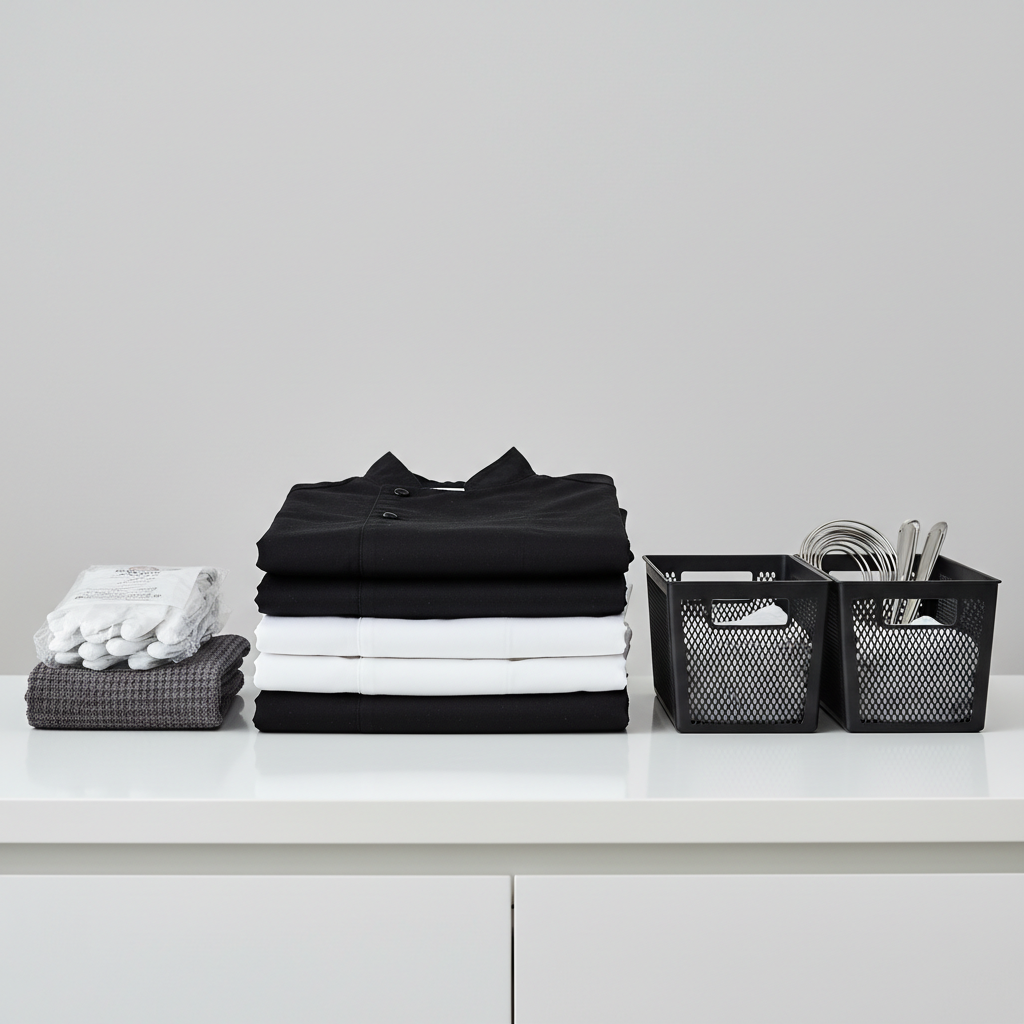
While color-coded tools manage environmental risks, the "Contact" component of the 5 C’s addresses the most common source of contamination: the human hand. Proper barrier protection is non-negotiable for preventing foodborne illness outbreaks. Essential kitchen safety practices rely on choosing the right glove material for the specific task at hand to ensure both safety and cost-efficiency.
Glove Material | Best Use Case | Key Benefit |
|---|---|---|
Nitrile | Raw protein prep; heavy-duty tasks | Puncture resistant; latex-free |
Vinyl | Plating; light-duty assembly | Cost-effective for frequent changes |
Poly | Quick service; light handling | Economical; easy to slip on and off |
Nitrile is the preferred choice for intensive prep work because it provides a superior barrier and avoids latex allergy complications. Beyond hand protection, disposable aprons are vital in high-risk zones, such as raw poultry stations, to prevent the transfer of pathogens from a worker's uniform to other surfaces.
Compliance also hinges on the quality of your hand hygiene products. If the hand soap provided is too harsh and causes skin irritation, employees may subconsciously avoid the frequent washing cycles required by Utah health codes. Stocking high-quality, emollient-based soaps encourages staff to maintain hygiene standards without damaging their skin. Maintaining a consistent inventory of these commercial kitchen supplies ensures that your team never has to compromise on safety during a busy shift. Through responsive supply chain support, Juab Restaurant Supply helps you keep these essential food safety supplies for commercial kitchen use available at all times. Get help with your food safety checklist to ensure your hygiene station is fully equipped for your next inspection.
Sanitation and Chemical Safety, Cleaners and Test Strips
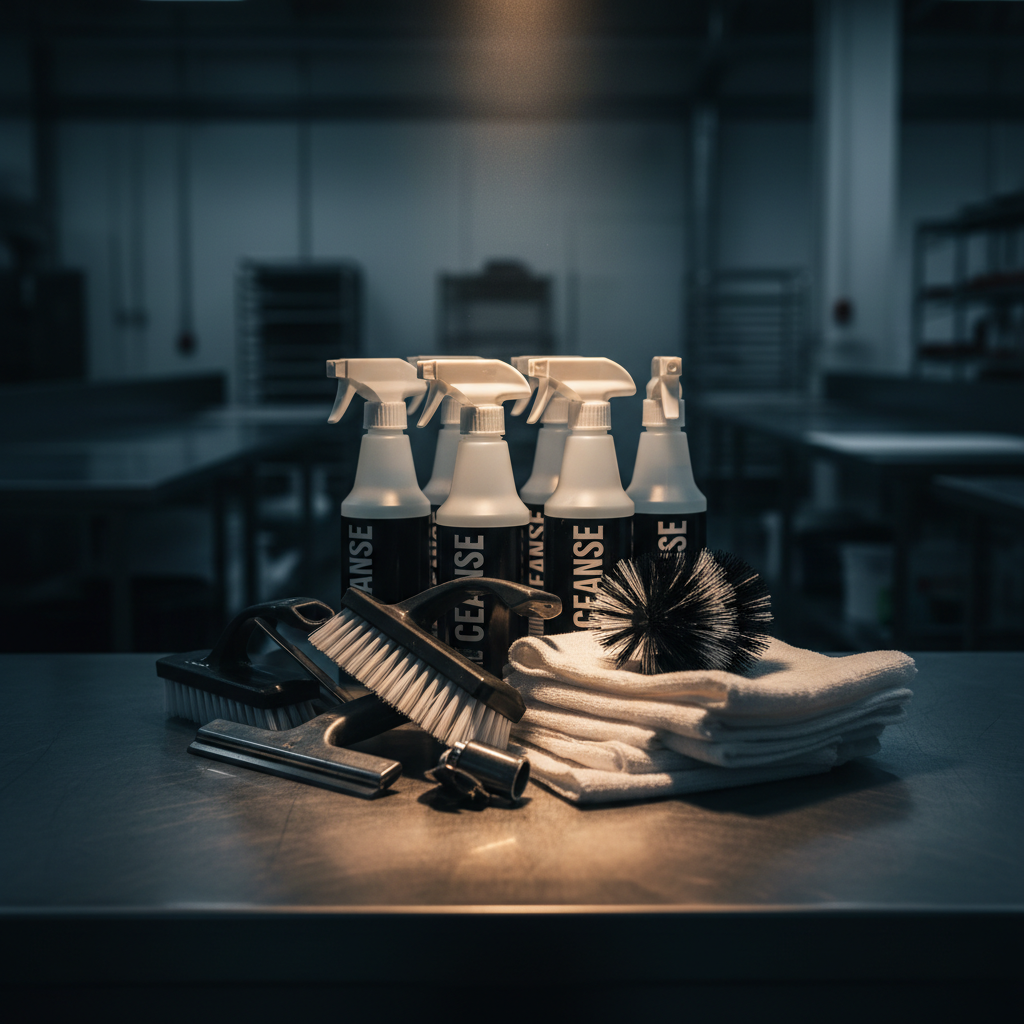
Effective barrier protection is the first line of defense, but it must be supported by a rigorous sanitation schedule for every food-contact surface. Maintaining a sterile environment requires a clear distinction between cleaning and sanitizing. Cleaning involves the physical removal of debris, grease, and food particles from a surface. Sanitizing is the chemical reduction of pathogens to safe levels. These two steps require separate commercial kitchen supplies and dedicated tools to be effective. Most Utah kitchens utilize color-coded buckets to maintain this separation; typically, green buckets are used for cleaning solutions and red buckets for sanitizers.
The choice of chemical sanitizer generally falls into two categories:
Sanitizer Type | Active Ingredient | Characteristics |
|---|---|---|
Chlorine | Sodium Hypochlorite | Fast-acting; cost-effective; requires careful dilution to avoid corrosion. |
Quat | Quaternary Ammonium | Non-corrosive; stable at higher temperatures; leaves a residual germicidal film. |
A frequent and easily avoidable violation during health inspections is failing to verify the concentration of these chemicals. You cannot determine the efficacy of a solution by its smell or color. Every station must have the appropriate test strips to measure parts-per-million (PPM) levels. For chlorine, the standard is usually 50 to 100 PPM; for Quat, it is typically 200 to 400 PPM, though you should always follow the manufacturer's label. Inaccurate dosing is not just a safety risk; it is a waste of chemical resources.
Properly stocked food safety supplies for commercial kitchen use prevent these errors. Relying on responsive supply chain support ensures you never run out of these critical monitoring tools during a busy shift. If your team needs to update their sanitation protocols, Get help with your food safety checklist to ensure your chemical concentrations meet local safety codes.
Food Rotation and Labeling, The HACCP Checklist Essentials
Effective sanitation protocols only succeed when paired with a rigorous organization system. The First In, First Out (FIFO) method is the industry standard for inventory management, ensuring that older ingredients are moved to the front and used before newer arrivals. This practice minimizes spoilage and maintains the quality of every plate served. To implement FIFO effectively, your staff needs specialized commercial kitchen supplies like food rotation labels and dissolvable date stickers.
Labels serve as the primary documentation for a Hazard Analysis and Critical Control Point (HACCP) plan. A robust HACCP checklist requires verifiable data on when a product was prepared, its expiration date, and who handled it. Using dissolvable labels is a practical choice for busy kitchens because they wash off completely in the dishwasher; this prevents the bacterial buildup often found under old adhesive residue left by standard masking tape.
Maintaining a consistent stock of these food safety supplies for commercial kitchen use prevents the chaos of handwritten, illegible notes. Juab Restaurant Supply emphasizes straightforward service by providing the specific labeling tools that make compliance effortless for your prep team. With responsive supply chain support, you can ensure your labeling station never runs dry during peak seasons. Get help with your food safety checklist to determine which rotation system best fits your production volume and storage layout.
Managing Your Supply Chain for Consistent Reliability
Operating a commercial kitchen in Juab County requires a logistics strategy that accounts for local distance. Relying on national vendors often leads to backorders on high-turnover items like vinyl gloves, surface sanitizers, or probe thermometers. In a fast-paced environment, these delays are not just an inconvenience; they are a threat to operational continuity. If a kitchen lacks the necessary food safety supplies for commercial kitchen compliance, the risk of an inspection failure or a safety lapse becomes immediate.
Juab Restaurant Supply prioritizes inventory stability for regional operators. By maintaining a deep catalog of essential commercial kitchen supplies, we eliminate the uncertainty of national shipping delays. This local availability allows kitchen managers to focus on culinary execution and staff training rather than tracking shipments of test strips or date labels. Effective food safety management depends on responsive supply chain support that understands the unique pressures of the Utah foodservice industry. Consistent access to barrier supplies and sanitation tools ensures that your standards never dip. Get help with your food safety checklist to secure a reliable source for your daily necessities.