Common food truck equipment mistakes include selecting a vehicle before finalizing the menu, underestimating generator power requirements, and purchasing used gear without a professional inspection. These errors often result in inefficient workflows or unexpected maintenance costs that can quickly drain your daily profit margins. Operators can avoid these pitfalls by prioritizing commercial-grade quality and verifying that every piece of gear meets local health code standards.
Imagine a line of hungry customers wrapping around the block in Nephi, only for your generator to sputter because it cannot handle the combined load of your fryer and refrigeration. In the high pressure environment of a mobile kitchen, every square inch and every watt of power represents a potential bottleneck. Choosing the wrong equipment is not just a minor inconvenience; it is a direct drain on your daily margins and long term viability. To help you protect your investment, we have identified the most common equipment mistakes that hinder mobile entrepreneurs. This guide covers everything from the hidden costs of non NSF rated appliances to the logistical advantages of local supply chain reliability in rural Utah. You will learn how strategic purchasing and proper maintenance schedules can turn your truck into a high efficiency profit machine.
Why Food Truck Equipment Mistakes Drain Your Profit
In the food truck industry, profit margins are often measured in pennies per plate. Every square inch of the vehicle must generate revenue, making equipment selection a critical operational decision rather than a simple one time expense. When a piece of gear fails, the cost is not merely the repair bill; it is the $1,000 to $3,000 in lost daily sales that occur when you cannot serve customers. For operators in Juab County and surrounding rural Utah regions, this risk is amplified. Being miles away from major metropolitan service centers in Salt Lake or Provo means downtime lasts longer and shipping for replacement commercial equipment and supplies can be delayed by logistics.
Common food truck equipment mistakes often stem from prioritizing low upfront costs over long term reliability. A residential fridge or an undersized generator might seem like a budget win on day one, but these choices frequently lead to cascading failures during a high volume lunch rush. This guide moves beyond basic shopping lists to address how to avoid expensive errors that compromise your back of house necessities. By understanding how equipment choice impacts power load, workflow, and local supply chain logistics, operators can secure the responsive operational assistance needed to maintain consistency and cleanliness in a mobile environment.
The Hidden Cost of Non NSF Rated Equipment

Transitioning from the general costs of downtime, we look at the specific hardware choices that trigger these failures. A frequent food truck equipment mistake involves substituting residential appliances for commercial grade units. National Sanitation Foundation (NSF) certification indicates that a piece of equipment meets strict public health standards for design, construction, and materials. In the high heat, high vibration environment of a mobile kitchen, these standards are non negotiable.
Utah health departments, including those serving Juab and Millard counties, strictly enforce the use of NSF rated equipment. During a routine inspection, a residential refrigerator or microwave can result in an immediate violation or a requirement for replacement, costing you both fine money and operational time. Beyond regulatory hurdles, there is a severe liability risk. If an electrical fire or equipment failure occurs, insurance providers often deny claims if they discover that the appliance involved was not rated for commercial use.
The financial math of buying residential gear rarely works in your favor. While a consumer fridge may cost $800 versus $2,500 for a commercial unit, the residential model is designed for a kitchen at 70 degrees that opens twenty times a day. In a food truck, where ambient temperatures climb and the door opens every two minutes, the compressor will fail prematurely. Replacing a residential unit three times in two years is a common way to waste capital that should have been invested in commercial equipment and supplies from the start. Choosing certified back of house necessities ensures your rig remains compliant and functional during the busiest shifts.
Underestimating Power Requirements and Generator Load
Securing certified gear is only half the battle. A frequent food truck equipment mistake is purchasing a generator based on a rough estimate rather than a precise peak load calculation. Many operators add up the running wattage of their fryers, lights, and POS systems, then buy a generator that matches that total. This ignores the critical difference between running wattage and starting wattage, also known as surge or inrush current.
Compressors in refrigeration units and air conditioners require a massive surge of power, often three times their running load, just to kick on. When your generator is undersized, these surges cause brownouts. While the lights might just flicker, the drop in voltage is devastating to the sensitive circuit boards found in modern commercial equipment and supplies. Frying a control board in the middle of a rush doesn't just stop service; it requires specialized responsive operational assistance that can be difficult to source quickly in rural Utah.
Equipment Type | Typical Running Watts | Est. Starting Watts |
|---|---|---|
Commercial Reach-in Fridge | 600 – 800 | 2,000 – 2,400 |
Low-Profile Food Prep Table | 400 – 600 | 1,200 – 1,800 |
POS System & Printer | 150 – 200 | 150 – 200 |
LED Interior Lighting | 50 – 100 | 50 – 100 |
Always size your power source to handle the simultaneous startup of your two largest compressors plus the constant draw of all other electronics. Investing in a unit with a higher overhead prevents the voltage fluctuations that lead to permanent damage of your back of house necessities.
The Smallwares Oversight: How Poor Layout Leads to Lost Revenue

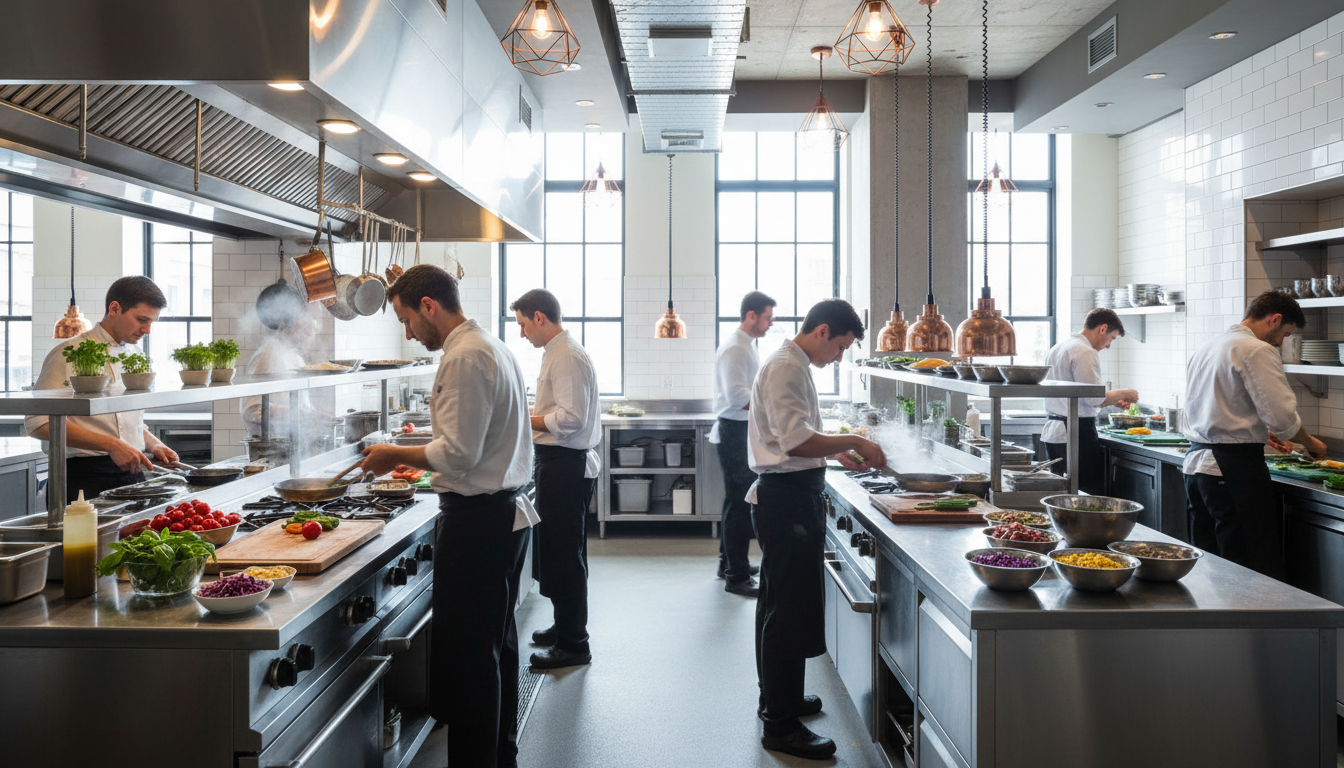
Efficiency in a mobile kitchen is measured by the number of steps a cook takes to complete an order. A critical food truck equipment mistake is neglecting the choreography of smallwares, which can add thirty seconds to every ticket. In a confined space, those seconds accumulate into significant revenue loss during a lunch rush at a local fair or community event. If your line cook must reach across a walkway to find the correct tongs or search through a cluttered drawer for a thermometer, your throughput drops.
Maximizing speed requires a layout where every tool has a fixed, logical home. We recommend replacing bulky, mismatched storage with stackable, clear polycarbonate containers that allow for instant inventory checks. Utilizing vertical space is equally vital; magnetic tool strips for knives and offset spatulas keep counter surfaces clear for actual food assembly. Choosing the correct depth for hotel pans (such as 2.5-inch versus 4-inch) in your prep table ensures that back of house necessities are easily accessible without causing unnecessary strain or slowing down the cooling process.
Smallware Category | Space-Saving Solution | Workflow Benefit |
|---|---|---|
Prep Storage | Square Stackable Containers | 25% better shelf utilization than round |
Utensil Management | Magnetic Tool Strips | Keeps high-use tools within reach, off counters |
Ingredient Access | 1/6 and 1/9 Size Pans | Maximizes variety in limited cold table space |
Measured Dispensing | Color-Coded Squeeze Bottles | Instant identification during high-speed assembly |
At Juab Restaurant Supply, we help operators evaluate their specific menu to identify the exact commercial equipment and supplies needed for tight footprints. Providing responsive operational assistance means helping you select smallwares that fit your specific rig dimensions perfectly, ensuring that your layout supports a high-volume workflow rather than hindering it.
Maintenance Failures: The High Price of Mobile Kitchen Downtime
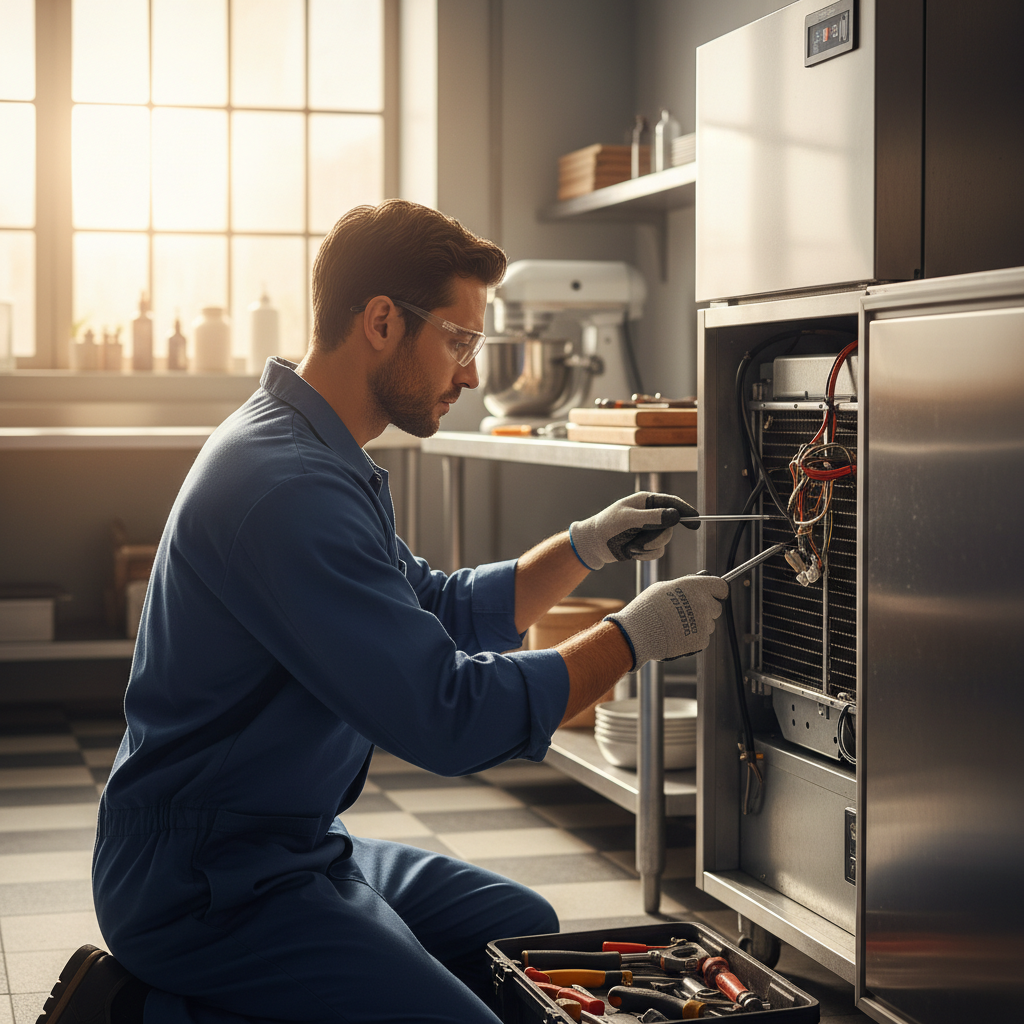
While a poor layout slows you down, maintenance failures stop you entirely. Unlike a brick and mortar restaurant, a food truck is a kitchen subjected to a minor earthquake every time it hits the road. One of the most overlooked food truck equipment mistakes is treating mobile gear like stationary appliances. Road vibrations loosen gas connections and mounting bolts; meanwhile, Utah’s seasonal dust can clog a generator’s intake in a single weekend at a dusty fairground or community event. A single day of downtime translates to $1,000 to $3,000 in lost revenue, a blow that many small operators cannot easily absorb.
Maintaining commercial equipment and supplies in a mobile environment requires a specialized schedule. Beyond basic cleaning, you must account for the physical stress of transit. Loose mounting bolts can lead to cracked weld points or refrigerant leaks, while vibrating gas lines pose a significant safety risk.
Frequency | Maintenance Task | Critical Focus |
|---|---|---|
Daily | Inspect Pilot Lights & Gas Connections | Check for leaks or flame instability after transit |
Daily | Generator Air Filter Check | Essential in dusty Juab County rural environments |
Weekly | Tighten Mounting Bolts | Prevent equipment shifting and frame stress |
Weekly | Clean Condenser Coils | Ensure airflow for refrigeration under high heat |
Operators who prioritize these checks reduce the need for emergency responsive operational assistance. Proactive care for your back of house necessities ensures that when you arrive at a venue, your kitchen is ready to serve immediately rather than sitting idle while you wait for parts.
Local Supply Chain Reliability: Avoiding Shipping Delays in Rural Utah
Relying on national e-commerce giants for critical hardware is a common food truck equipment mistake that overlooks the logistical realities of rural Utah. While a website might promise fast shipping, the last mile delivery to Juab, Millard, or Sanpete counties often involves delays that a high volume mobile business cannot afford. When a heavy piece of commercial equipment and supplies arrives damaged from an out-of-state warehouse, the return process can take weeks. This leaves your truck sidelined and your revenue at zero while you navigate automated customer service lines.
A local partnership provides a level of responsive operational assistance that national retailers cannot match. We understand the specific routes and timing required to keep operators in Nephi, Delta, or Manti stocked. Having a dependable local source for back of house necessities also prevents the costly emergency run to a big box store. When you run out of essential disposables or cleaning chemicals mid-shift, paying retail prices at a local convenience store or driving two hours to a metro area erodes your daily margin. A stable, local supply chain ensures you have the inventory needed to maintain consistency without the unpredictability of long distance freight or the inflated costs of last minute retail shopping.
Strategic Purchasing: Commercial Grade Disposables and Storage Solutions
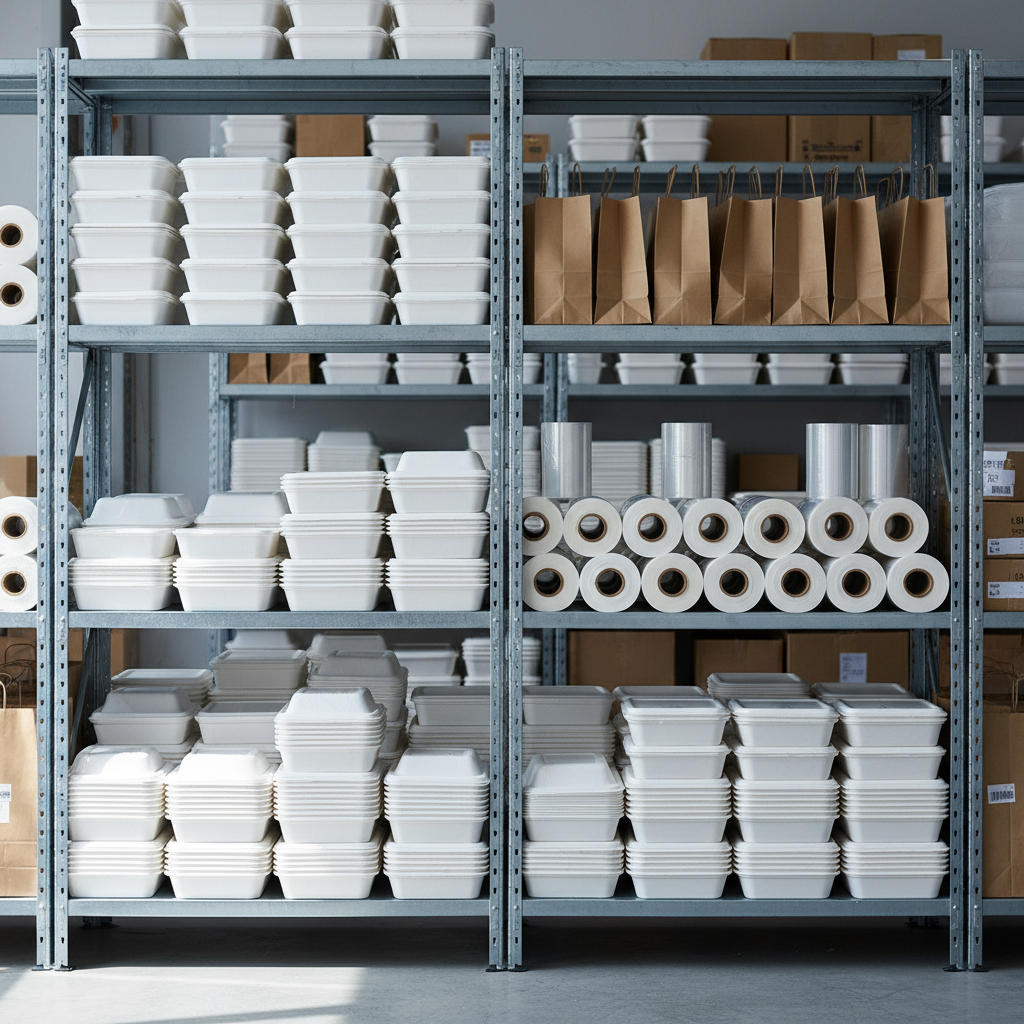
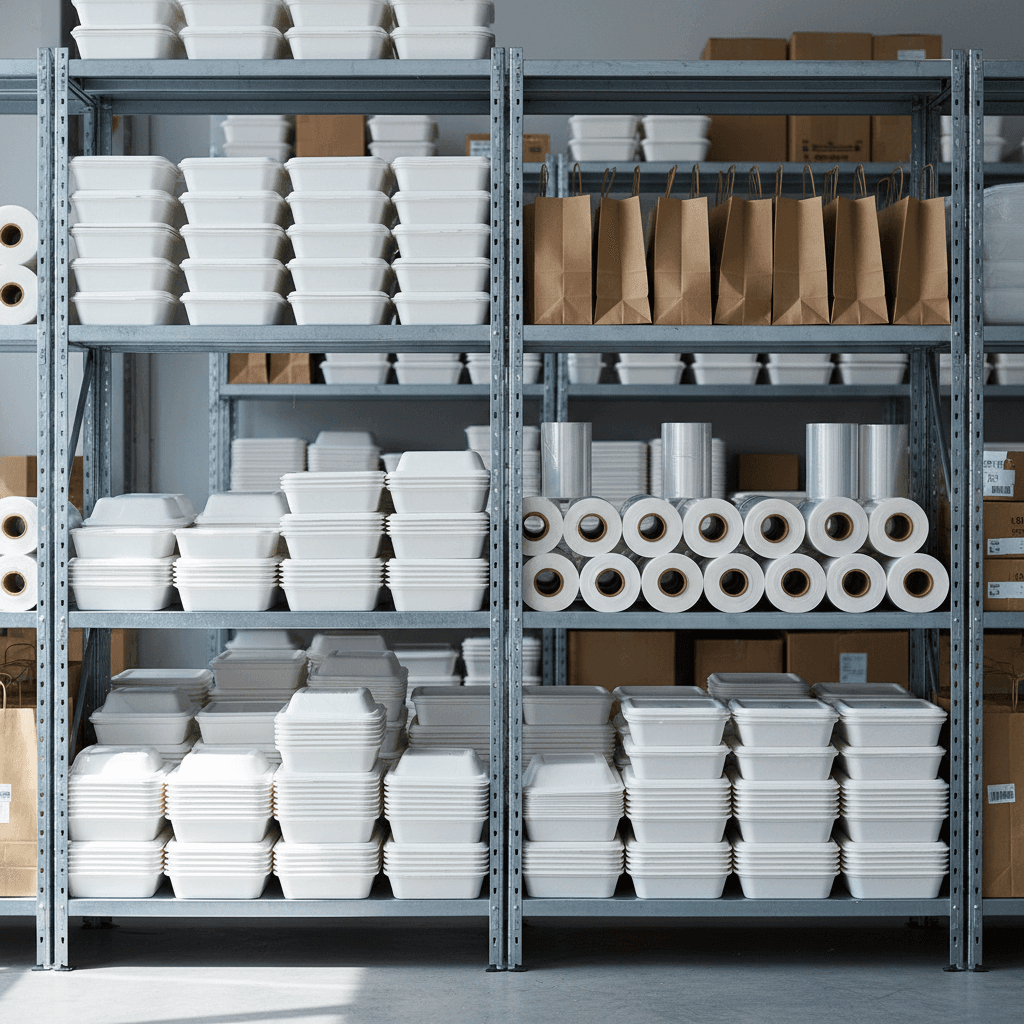
Inventory management for packaging is often where hidden food truck equipment mistakes occur. In a mobile environment, space is your most expensive asset. Overbuying disposables to save on bulk pricing can backfire if those boxes displace your back of house necessities or block essential airflow. Conversely, underbuying leads to service interruptions or the use of inappropriate, non-durable alternatives that leak during transport. Low-quality containers lead to grease-soaked bags and dissatisfied customers; this directly undermines your brand consistency and perceived value.
Effective storage requires high-density solutions, such as wall-mounted shelving and nested bins that keep inventory organized without consuming floor space. By utilizing a consistent supply schedule, you can maintain a lean inventory that matches your weekly sales volume rather than trying to store a three-month supply in a cramped galley.
Storage Challenge | Strategic Solution | Operational Benefit |
|---|---|---|
Bulky Disposable Boxes | Nested, high-density bins | Recovers floor space for foot traffic |
Container Instability | Vented, heavy-duty lids | Prevents leaks and customer complaints |
Frequent Stock-outs | Scheduled local replenishment | Eliminates emergency retail runs |
Juab Restaurant Supply provides the responsive operational assistance needed to fine-tune these order cycles. By sourcing commercial equipment and supplies and packaging together, you ensure that your containers fit your holding cabinets and prep tables perfectly, maximizing both productivity and customer satisfaction.
Success in the food truck industry often comes down to the efficiency of your equipment. Avoiding common purchasing and maintenance mistakes ensures that your daily profits stay in your pocket rather than going toward unnecessary repairs or inefficient workflows. If you want expert help selecting the right tools for your unique setup, our team is here to assist. You can learn more About our history of helping local entrepreneurs build kitchens that truly last.