Implementing a proactive schedule for commercial kitchen equipment maintenance ensures operational efficiency by combining daily cleaning tasks with specialized monthly inspections of refrigeration and cooking units. This preventative approach minimizes downtime, extends the lifespan of expensive appliances, and prevents high repair costs that can impact a restaurant's bottom line.
In the heat of a Friday night rush, the last thing any operator needs is a walk-in cooler failure or a combi oven that refuses to ignite. These malfunctions represent more than just a temporary inconvenience; they are direct threats to your profit margins, food safety standards, and staff morale. At Juab Restaurant Supply, we understand that proactive maintenance is the silent engine behind every successful commercial kitchen in Utah. It is the difference between a controlled, efficient environment and a chaotic, costly emergency. This guide provides a comprehensive roadmap for protecting your investment. We will examine essential daily routines, strategies for managing the unique challenges of Utah hard water, and methods for creating accountability through structured logs. By implementing these professional standards, you can extend the lifespan of your equipment and safeguard your bottom line against the high cost of neglect.
The Real Cost of Equipment Downtime for Utah Restaurants
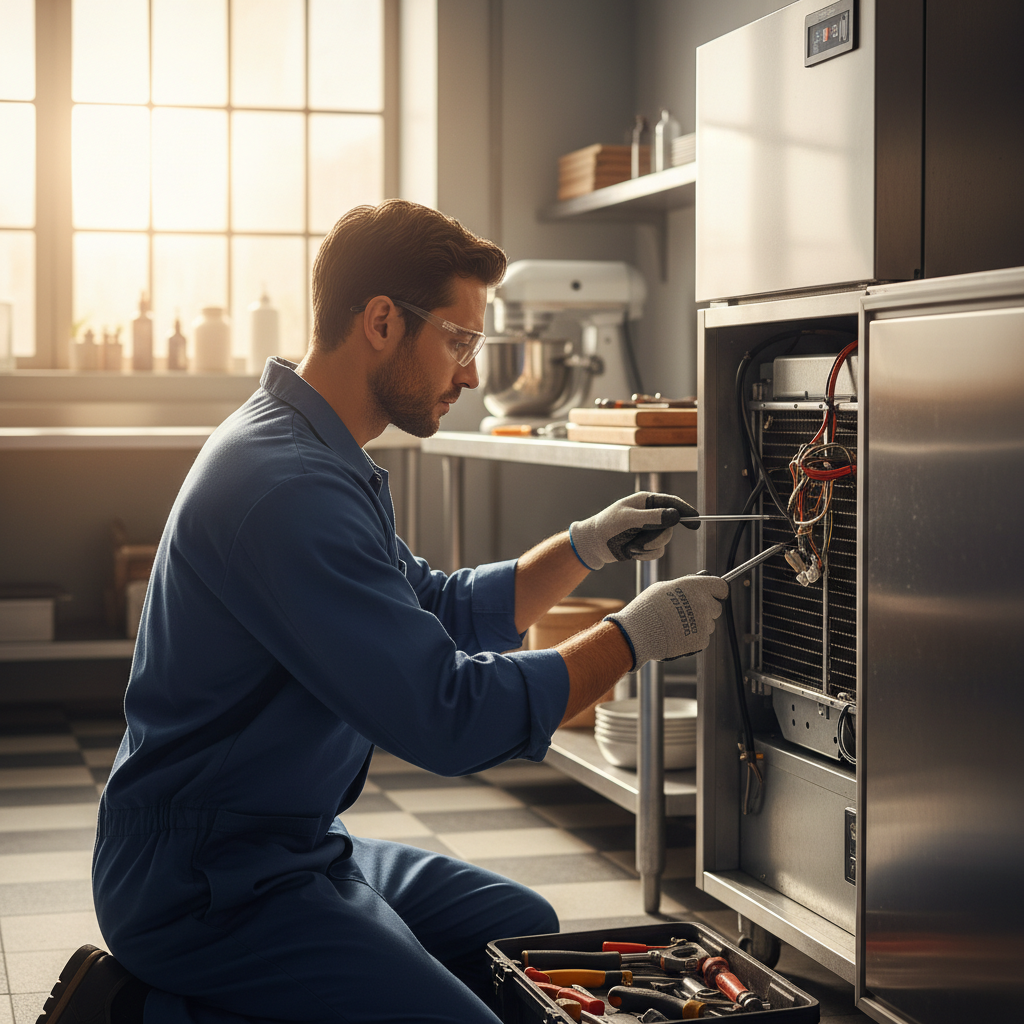
For a restaurant operator, equipment failure is rarely just a mechanical issue; it is a direct hit to the bottom line. Industry research indicates that unplanned equipment failures can cost a business up to 11 percent of its annual revenue. While many owners focus on the immediate cost of a service call, the broader financial impact is often much larger. In the United States, the food service industry spends approximately $28 billion on repairs annually, but the losses attributed to downtime reach a staggering $46 billion. The revenue lost during the hours or days a kitchen is offline frequently eclipses the actual repair bill.
In Juab County, these failures have a ripple effect. A broken walk-in cooler is not just an emergency technician fee; it is the total loss of perishable inventory, the disruption of a high-volume shift, and the long-term reputation damage that occurs when guests are turned away. When equipment fails, productivity halts, and labor costs continue to accrue without corresponding sales. Consistent commercial kitchen equipment maintenance is the most effective way to prevent these hidden expenses.
Juab Restaurant Supply serves as a partner in preventing these operational bottlenecks by providing reliable supply solutions for commercial kitchens. By offering operational assistance for foodservice businesses and maintaining a comprehensive catalog of restaurant equipment, we ensure that operators have the tools and supplies necessary to keep their kitchens running. Our focus is on helping you maintain a resilient supply chain so that small maintenance needs do not escalate into catastrophic shutdowns.
Daily Maintenance: The Foundation of Kitchen Longevity
Preventing the high costs of downtime begins with the front lines: the daily cleaning rituals that stop grease and carbon from causing mechanical strain. The FDA Food Code requires that equipment in contact with food be cleaned at least every 24 hours. Adhering to this standard does more than ensure safety; it preserves the physical integrity of your assets. Establishing a routine for daily commercial kitchen equipment maintenance ensures that small particles do not lead to large-scale mechanical failures.
Start with high-heat areas. Clearing debris from flat-top griddles prevents carbon buildup that can warp the plate over time. Similarly, cleaning fryer rims prevents grease from migrating into electrical components or igniting. For cold storage, wiping down the rubber seals on refrigeration units is critical. Food particles trapped in these gaskets prevent an airtight closure, forcing the motor to cycle constantly to maintain temperature.
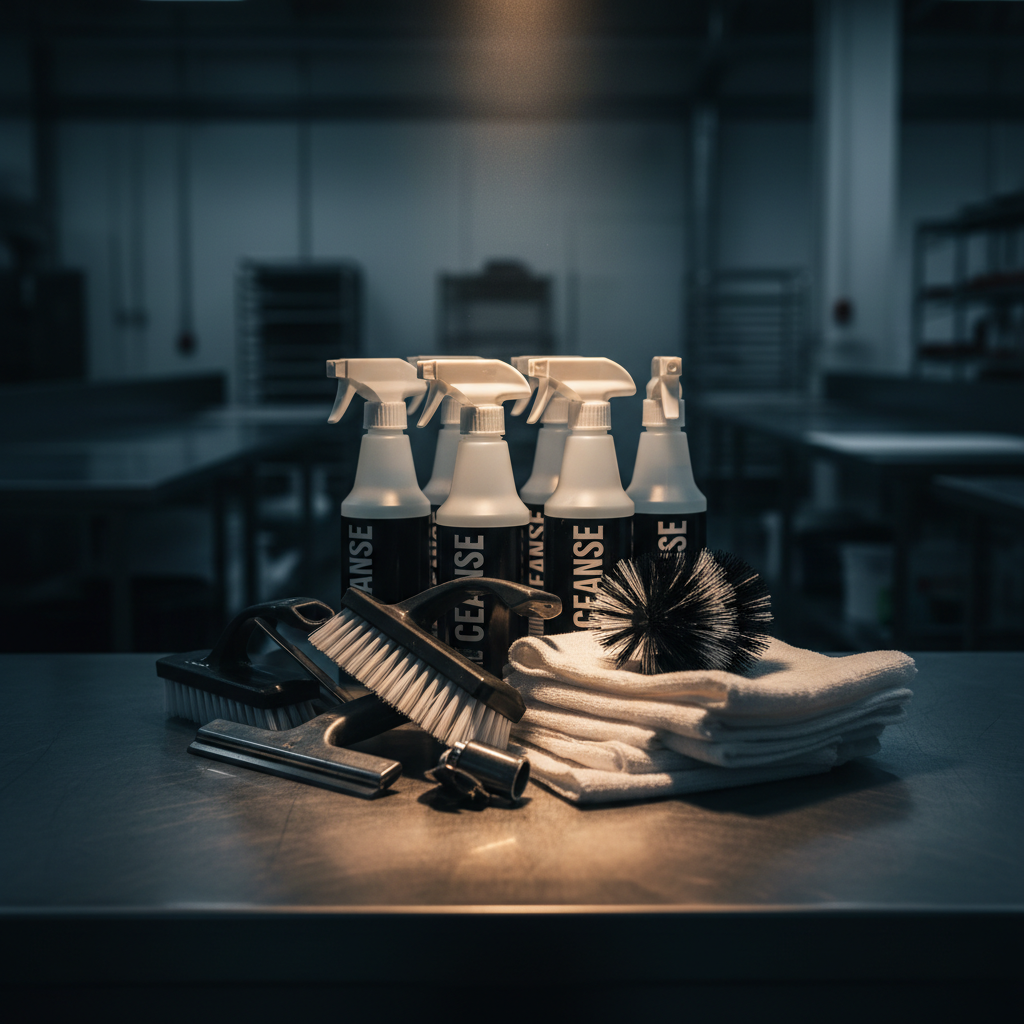
Execution requires the right tools. Using the correct cleaning smallwares, such as nylon-bristle brushes and specialized griddle scrapers, is essential to avoid scratching or pitting stainless steel surfaces. Juab Restaurant Supply provides operational assistance for foodservice businesses by stocking the specific brushes and heavy-duty degreasers found in our comprehensive catalog of restaurant equipment. Consistently performing these basics is the most reliable way to push your equipment toward the upper end of its expected 10 to 15 year lifespan.
Weekly and Monthly Maintenance Checklist for High Impact Equipment
Moving beyond daily routines, weekly and monthly schedules tackle the hidden mechanical wear that daily wipes miss. These tasks focus on the internal components of your high impact equipment, directly influencing their operational efficiency and total life expectancy.
On a weekly basis, operators should pull and degrease hood filters. Saturated filters restrict airflow, forcing the exhaust fan to work harder and allowing heat and smoke to linger in the kitchen. In the dish pit, inspect the spray arms. Check the nozzles for small bits of debris or mineral deposits that disrupt the spray pattern. Additionally, calibrate all handheld and fixed thermometers using the ice bath method. Accuracy is essential not just for compliance, but for reducing food waste caused by incorrect holding temperatures.
Monthly maintenance involves technical attention to the machine heart. Cleaning refrigeration coils is perhaps the most critical task in this cycle. A layer of dust on these coils acts as an insulator, forcing the compressor to run up to 20 percent harder to reject heat. This unnecessary strain is the primary reason why many units fail well before their 10 to 15 year lifespan.
Equipment | Monthly Maintenance Task | Purpose |
|---|---|---|
Refrigeration | Vacuum/Brush Condenser Coils | Reduce motor strain and energy costs |
Mixers/Hinges | Apply Food-Grade Lubricant | Prevent metal-on-metal wear and seizing |
Ice Machines | Deep Clean and Sanitize | Remove scale and prevent mold growth |
Ovens/Steamers | Inspect Door Gaskets | Ensure heat retention and energy efficiency |
Properly maintaining these systems requires specialized supplies. Juab Restaurant Supply provides operational assistance for foodservice businesses by helping managers identify the specific food-grade lubricants and descalers needed for their specific brands. By sourcing these items through a comprehensive catalog of restaurant equipment, you ensure your staff has the right tools to perform commercial kitchen equipment maintenance effectively. Consistent monthly attention transforms a reactive repair culture into a proactive strategy, providing reliable supply solutions for commercial kitchens that keep the doors open and the utility bills manageable.
Addressing Utah Hard Water and Other Local Environmental Factors
Operators in Juab County face unique challenges due to Utah’s mineral dense water. High concentrations of calcium and magnesium, commonly referred to as hard water, create significant issues for steam equipment, dishwashers, and ice machines. When mineral scale builds up on heating elements, it acts as an insulator; this forces the component to work harder to reach target temperatures, eventually leading to premature element failure. In ice machines, this buildup can clog internal lines and coat evaporator plates, resulting in slow harvest cycles and poor ice quality.
Preventing this damage requires more than just standard cleaning. A localized approach to commercial kitchen equipment maintenance must include regular descaling and the use of high quality water filtration systems. Juab Restaurant Supply offers operational assistance for foodservice businesses to help determine the correct filtration flow rates and media types needed for our specific local water profile. Our comprehensive catalog of restaurant equipment includes the specialized chemicals and replacement cartridges required to keep scale from compromising your assets.
Furthermore, the extreme climate variations in Juab County put additional stress on external components. The intense summer heat forces refrigeration compressors to work at their absolute limits, while freezing winter temperatures can impact rooftop HVAC units and outdoor condensers. During these seasonal shifts, filter checks should increase in frequency to ensure airflow remains unobstructed. By securing reliable supply solutions for commercial kitchens, operators can ensure they have the filters and descalers on hand before environmental stress leads to a system shutdown.
How to Extend the Life of Your Commercial Refrigeration and Ovens
To protect your two most significant capital investments, refrigeration and ovens, your commercial kitchen equipment maintenance strategy must go beyond surface wiping. For refrigeration units, the door gasket is the primary line of defense. You can perform a practical "paper test" by closing the door on a slip of paper; if the paper pulls out without resistance, the seal is failing. This allows cold air to escape, forcing the compressor to work overtime. Furthermore, internal airflow is vital. Staff should ensure items are never stacked against the evaporator fan housing, as restricted circulation creates hot spots and increases mechanical load.
When maintaining convection or combi ovens, focus on the fan blades and door seals. Grease accumulation on fan blades causes an imbalance that eventually destroys the motor bearings. For combi units, seals must be kept free of food debris to maintain the precise moisture and pressure levels required for efficient operation. While staff handle these daily tasks, an annual professional inspection is critical to verify gas manifold pressure and tighten electrical connections that naturally loosen during repeated heat cycles. Juab Restaurant Supply supports these efforts by providing reliable supply solutions for commercial kitchens and operational assistance for foodservice businesses to ensure your high value equipment stays in service longer. Accessing the right cleaning tools from a comprehensive catalog of restaurant equipment ensures staff can perform these deep-dive tasks without damaging sensitive components.
Strategic Supply Management: Keeping Maintenance Necessities on Hand
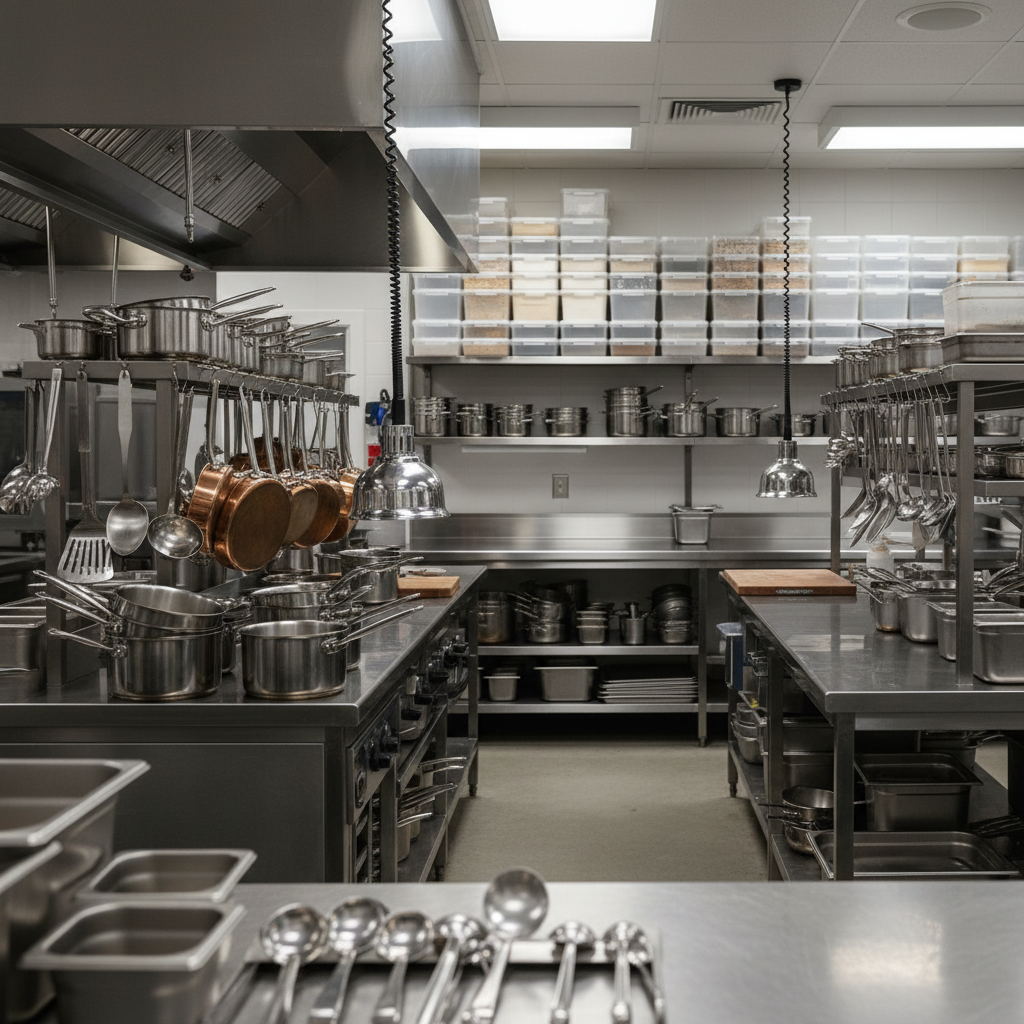
A well-documented maintenance schedule is meaningless if your staff cannot find the tools required to complete the work. When a line cook discovers the degreaser bottle is empty or the coil brush is missing, the task is skipped, leading to the mechanical strain mentioned earlier. Strategic supply management ensures that your commercial kitchen equipment maintenance remains uninterrupted by inventory errors.
Every efficient kitchen should maintain a dedicated maintenance kit that includes:
NSF-approved food-grade lubricants for mixer gears and slicer carriages.
Stiff-bristled condenser brushes and specialized grout brushes for cleaning gasket grooves.
Heavy-duty, non-corrosive degreasers formulated for commercial stainless steel.
A standing inventory of replacement water filters and HVAC media.
Juab Restaurant Supply focuses on providing reliable supply solutions for commercial kitchens so these back-of-house necessities never run dry. By utilizing our comprehensive catalog of restaurant equipment, operators can source the specific consumables that drive equipment longevity. We offer operational assistance for foodservice businesses to help identify exactly which brushes or chemicals are compatible with your specific brands, removing the guesswork and preventing the excuse that a task was skipped because the right cleaner wasn't available. Consistency in supply leads directly to consistency in equipment performance.
Creating a Maintenance Log: Accountability for Your Bottom Line
Accountability transforms a maintenance checklist from a suggestion into an operational standard. Formalizing your commercial kitchen equipment maintenance through a physical binder or digital spreadsheet creates a verifiable history for every asset. To be comprehensive, your log should track the seven elements of preventive maintenance: inspection, cleaning, lubrication, adjustment, testing, replacement, and record-keeping. Juab Restaurant Supply provides operational assistance for foodservice businesses to help managers design logs that align with their specific workflow.
Assigning these tasks to specific opening or closing shifts ensures clear responsibility and prevents essential duties from being overlooked during peak hours. When staff utilize professional tools from our comprehensive catalog of restaurant equipment, documenting that work ensures reliable supply solutions for commercial kitchens lead to sustained productivity and fewer emergency repairs.
Maintaining your commercial kitchen equipment is a vital investment in your business longevity. By prioritizing consistent cleaning and routine inspections, you can prevent expensive repairs and keep your operations seamless. If you want expert help navigating the complexities of kitchen maintenance or upgrading your gear, our team is ready to assist. You can explore our selection of high quality Products to find solutions designed for performance and reliability. We are here to support your success every step of the way.