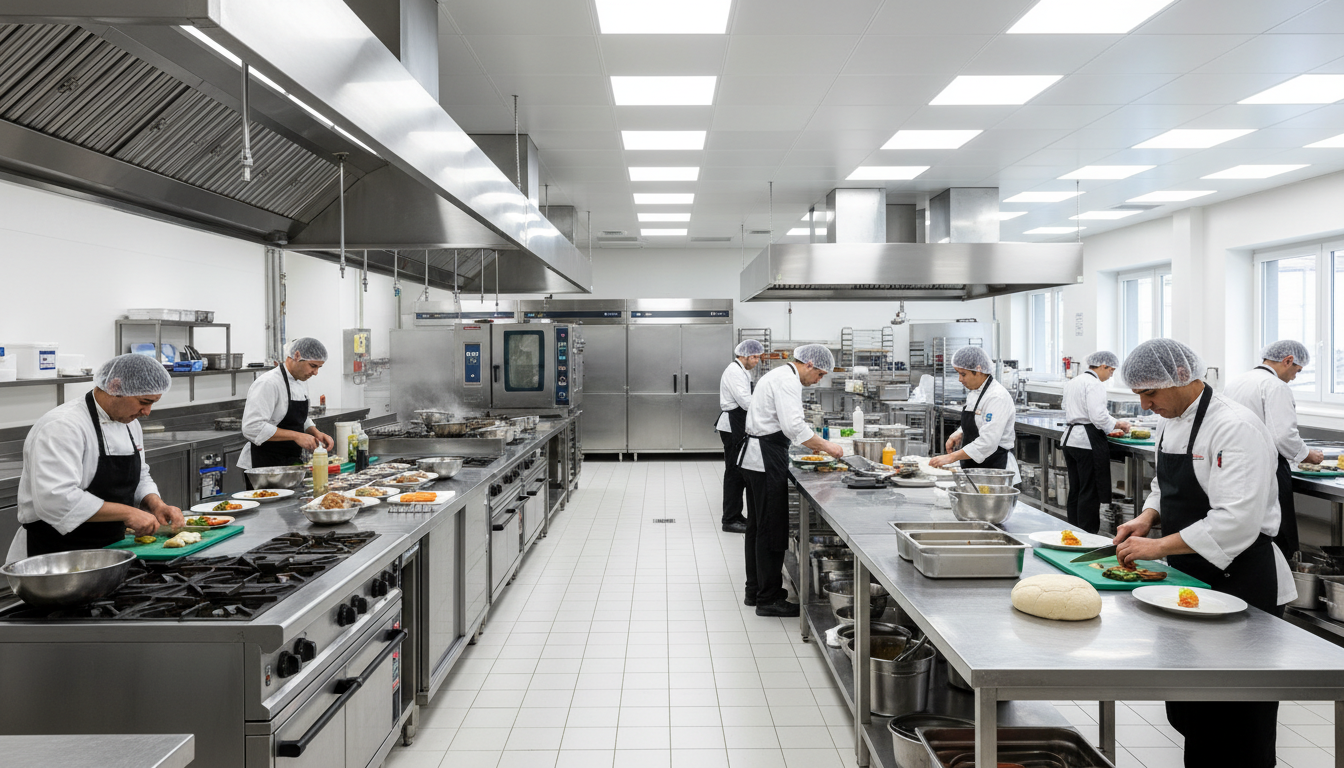
Restaurants can reduce commercial kitchen energy costs by replacing outdated appliances with ENERGY STAR certified models and maintaining a strict equipment servicing schedule. These upgrades improve operational efficiency while reducing waste; additionally, implementing simple energy management practices like powering down idle machinery ensures long term utility savings.
For most restaurateurs, the utility bill represents one of the most unpredictable yet significant line items on the monthly balance sheet. A commercial kitchen operates as a high demand environment where every burner, compressor, and ventilation hood consumes power at an aggressive rate. Managing these overhead costs is not just about sustainability; it is about protecting your bottom line in an industry with notoriously thin margins. Relying on aging, inefficient equipment can silently siphon profits through wasted BTUs and excessive electrical draw. This guide explores how strategic equipment upgrades can transform your operational efficiency. We will examine which high impact appliances offer the best returns, the critical role of refrigeration maintenance, and how to calculate the ROI of replacing versus repairing your current inventory. You will also discover how small operational adjustments can yield substantial long term savings.
The High Cost of Power in Foodservice Operations
Commercial kitchens are among the most energy intensive commercial spaces in the country, often consuming up to 10 times more electricity and gas per square foot than a standard office building. This high intensity is particularly pronounced in Quick Service Restaurants (QSRs), where high volume cooking and rapid throughput require constant uptime for fryers, grills, and HVAC systems. While full service operations also face significant bills, the sheer density of equipment in a QSR environment creates a unique challenge for owners trying to protect their bottom line.
Most operators manage their business using the 30/30/30 rule: 30 percent of revenue goes to food costs, 30 percent to labor, and 30 percent to general operating costs. This leaves a narrow 10 percent profit margin. When you find ways to reduce commercial kitchen energy costs, you are not just trimming a bill; you are directly expanding that final 10 percent. Every dollar saved on utilities is a dollar added to your net income, providing the capital needed for growth or emergency repairs.
In Utah, where seasonal temperature shifts put additional strain on both refrigeration and ventilation, local operators need a strategy that balances upfront costs with long term efficiency. Juab Restaurant Supply serves as a practical partner for kitchens across Juab County and beyond. By focusing on reliable product availability and responsive support, we help businesses select equipment that lowers consumption without sacrificing the output required for a busy lunch rush. Choosing value oriented, high efficiency solutions is the most direct path to stabilizing overhead in an increasingly expensive market.
Prioritizing Energy Efficient Restaurant Equipment for High Impact Results
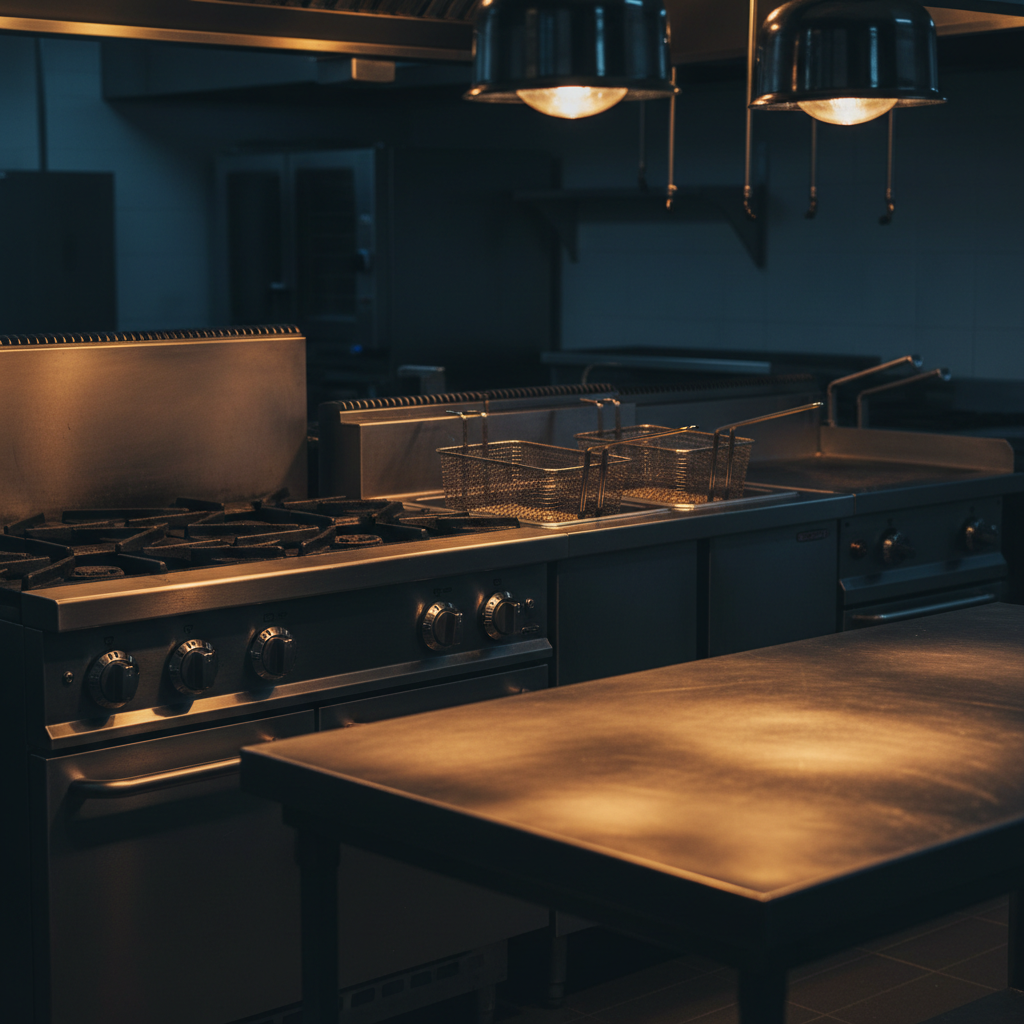
To successfully reduce commercial kitchen energy costs, an operator must target the most resource-intensive appliances first. Fryers, griddles, and ovens are the primary drivers of utility spikes in any hot line. For example, ENERGY STAR certified fryers utilize advanced burner designs and better insulation to be up to 35 percent more energy efficient than standard models. Because these units are the workhorses of the kitchen, that 35 percent reduction represents a substantial shift in monthly overhead. Over a typical 10 to 15 year lifespan, the savings often cover the initial cost of the unit several times over.
The shift from traditional gas ranges to induction cooktops offers another significant opportunity for savings. Traditional gas burners release a massive amount of waste heat into the kitchen environment, whereas induction technology uses electromagnetic fields to transfer heat directly to the cookware. This method ensures that the energy paid for is actually cooking the food rather than heating the air.
Technology Type | Heat Transfer Efficiency | Impact on Kitchen Temperature |
|---|---|---|
Traditional Gas | Approx. 40% | High waste heat; increases HVAC load |
Standard Electric | Approx. 70% | Moderate waste heat |
Induction | Approx. 90% | Minimal waste heat; cooler workspace |
Reducing ambient heat does more than just lower the gas or electric bill for the appliance itself; it fundamentally changes the demands on your ventilation and cooling systems. When your line runs cooler, your HVAC system does not have to work nearly as hard to maintain a comfortable temperature for staff. At Juab Restaurant Supply, we prioritize reliable product availability for these high impact units so that local kitchens can upgrade without long lead times. Selecting a high efficiency convection oven or an induction range is a strategic move that addresses the high cost of power at the source while creating a more productive, temperate working environment for your team.
Refrigeration and Ice Machines: The Always On Energy Drain
While the hot line draws significant power during peak hours, refrigeration presents a unique financial challenge: it is the only equipment in your facility that never takes a break. Because reach-ins and walk-ins run 24 hours a day, 365 days a year, they represent the constant baseline of your utility bill. To effectively reduce commercial kitchen energy costs, operators must look beyond the BTU ratings of grills and consider the cumulative impact of cooling cycles.
Modern, high efficiency compressors are designed to maintain stable temperatures with less frequent cycling, even when the ambient kitchen temperature rises. However, the most advanced compressor cannot overcome poor insulation. High density foam insulation in cabinet walls ensures that the cold air you pay for stays inside. For walk-in units, the implementation of strip curtains and the regular inspection of door gaskets are essential. A torn gasket or a door left slightly ajar allows cold air to escape, forcing the motor to work overtime and shortening the lifespan of the equipment.
Ice machines are another often overlooked source of waste. Units with the ENERGY STAR label are roughly 10 percent more energy efficient and 20 percent more water efficient than standard models. These savings translate to hundreds of dollars in annual utility reductions. At Juab Restaurant Supply, we maintain reliable product availability for cooling solutions that prioritize these efficiencies. By selecting equipment with superior thermal retention and efficient recovery times, Utah operators can protect their inventory while stabilizing their most persistent monthly expense.
The Maintenance Connection: Protecting Your Efficiency Investment
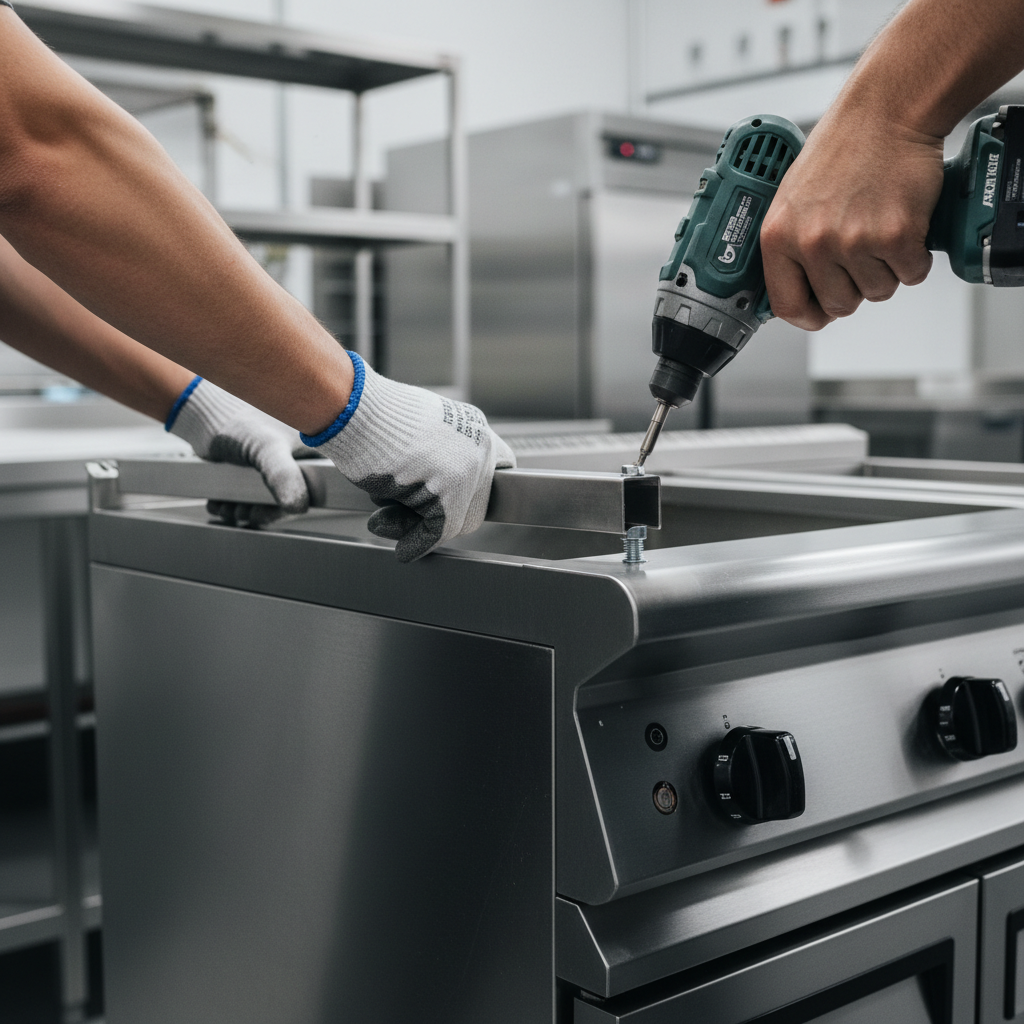
Investing in high efficiency appliances is only half the battle. If an operator fails to maintain those units, the efficiency gains are quickly erased. Neglecting routine care turns a precision machine into a liability that drains profits through increased utility bills and premature component failure. Data from industry experts at Boh.ai indicates that something as simple as dirty condenser coils or worn door seals can force equipment to work significantly harder, driving up energy consumption by 20 percent or more.
Regular upkeep is essential to reduce commercial kitchen energy costs effectively. For refrigeration, this means keeping coils free of dust and grease to ensure proper heat exchange. For steam equipment like combi ovens or steamers, scale removal is a critical priority. Calcium and mineral deposits act as an insulator, forcing the heating elements to run longer to reach the same temperature. This reduces thermal efficiency and increases the strain on internal parts, eventually leading to costly emergency repairs.
To protect your investment, follow a structured commercial kitchen equipment maintenance guide that includes deep cleaning and gasket inspection. At Juab Restaurant Supply, we provide the high quality cleaning supplies and water filtration systems needed to prevent buildup before it starts. By pairing reliable product availability with responsive support for service needs, we help Utah kitchens ensure that their equipment continues to operate at peak efficiency throughout its entire service life.
Calculating Your ROI: When to Upgrade vs. Repair
Deciding when to retire a piece of equipment requires a cold, hard look at the numbers. While maintenance extends life, there is a point of diminishing returns where a repair is simply throwing good money after bad. To truly reduce commercial kitchen energy costs, operators must understand the payback period, which is the time it takes for energy savings and rebates to cover the price difference of a new, high efficiency unit.
Consider the financial impact of a strategic upgrade. If a Utah operator qualifies for a $4,000 rebate on a high efficiency fryer and combines that with the immediate drop in monthly gas bills, the total gain in the first year can reach $10,000. This calculation includes avoided repair costs and the increased throughput of modern technology. Because commercial units typically have a service life of 10 to 15 years, these savings compound. A unit that saves $1,200 annually in utilities generates $18,000 in pure profit over 15 years, a figure that dwarfs the initial capital expenditure.
For businesses in Juab County, the local utility landscape often provides additional incentives. Many regional providers offer rebates for ENERGY STAR certified equipment to lower the upfront cost of energy efficient restaurant equipment. At Juab Restaurant Supply, we maintain reliable product availability for units that meet these rebate criteria, helping you maximize your initial investment.
Cost Factor | Aging Equipment (Repair) | New High-Efficiency Unit |
|---|---|---|
Annual Energy Cost | $3,800 | $2,400 |
Annual Maintenance | $900 | $100 |
First Year Incentives | $0 | $4,000 (Rebates) |
Total Year 1 Impact | $4,700 Outflow | $1,500 Net Gain |
When your current unit requires a repair exceeding 50 percent of its replacement value, or if it is nearing the end of its 10 year lifespan, the ROI clearly shifts toward replacement. Our team provides the responsive support needed to evaluate these timelines, ensuring you do not miss the window where an upgrade becomes a profit generator rather than a cost.
Beyond the Big Box: Smart Smallwares and Operational Habits
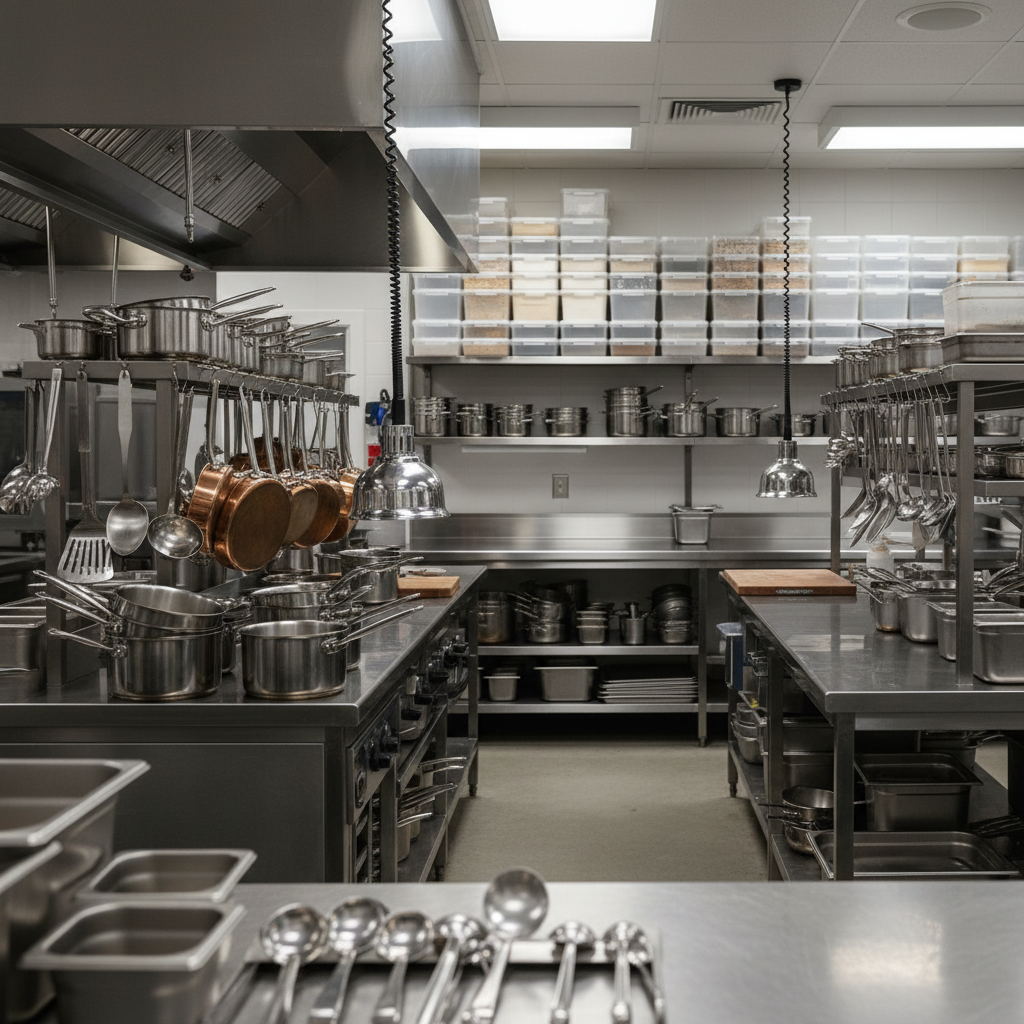
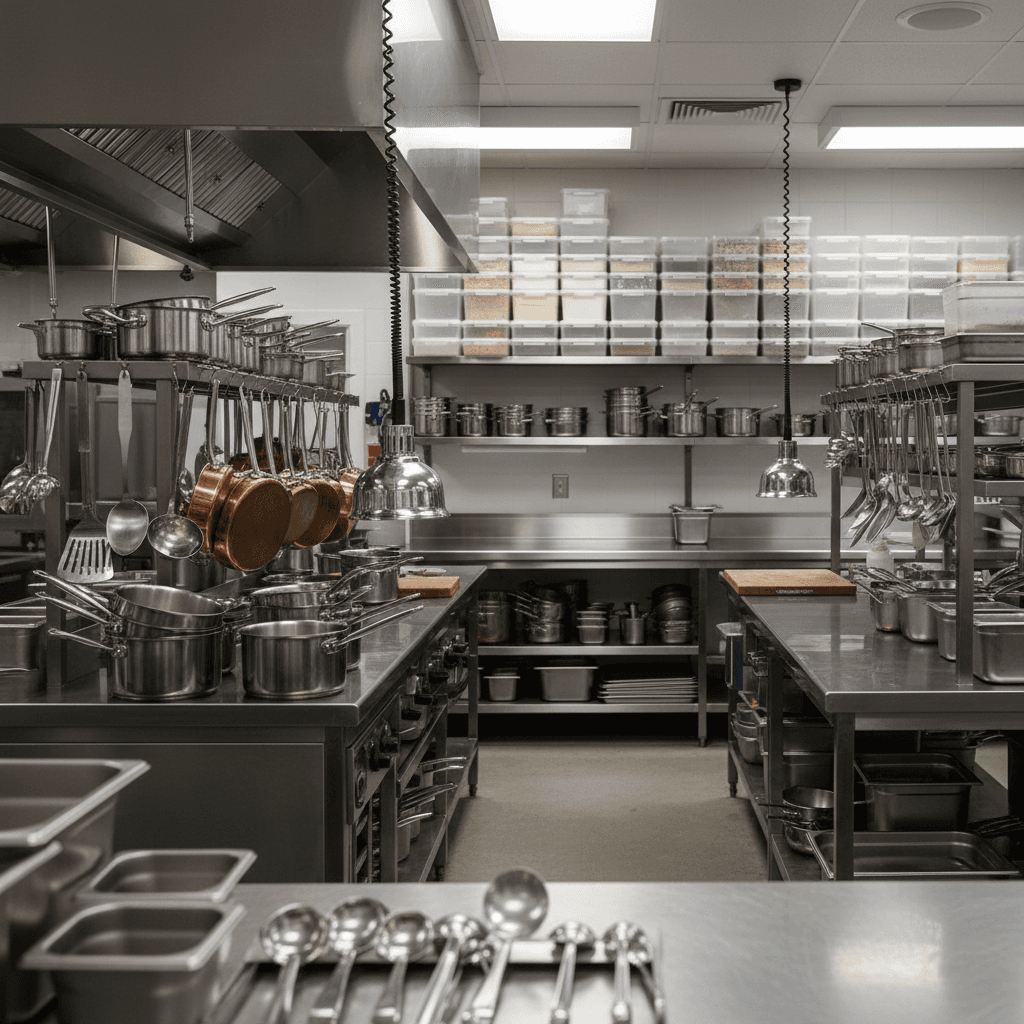
High capital investments provide the largest returns, but daily operational habits and smallware choices offer an immediate way to reduce commercial kitchen energy costs with minimal upfront spend. Efficiency often begins with the literal point of contact between heat and food. Matching cookware diameter to the size of the burner prevents thermal energy from escaping into the kitchen air. Using a small saucepan on a large stockpot burner is an inefficient use of gas or electricity. Furthermore, the simple act of using tight fitting lids when boiling water or simmering sauces can reduce energy consumption by as much as 50 percent compared to open pots.
Organization in the back of house also plays a critical role in energy management. When ingredients are stored in clearly labeled, transparent food storage bins and arranged on logical shelving units, staff spend less time searching for items. This efficiency directly impacts utility bills. A cook who knows exactly where to find a prep container spends five seconds at the reach-in rather than thirty. Keeping refrigeration and oven doors closed as much as possible prevents the units from constantly cycling to recover lost temperature.
At Juab Restaurant Supply, we maintain reliable product availability for the storage solutions and smallwares that streamline these workflows. By combining professional grade cookware with smart organizational tools, Utah operators can eliminate the cumulative waste that occurs when small inefficiencies go unchecked. Our team provides the responsive support needed to identify which storage configurations will best suit your specific kitchen layout, ensuring that your staff can work quickly and your equipment can remain closed and efficient more often.
Upgrading to energy-efficient appliances is a powerful way to lower your utility bills and improve your kitchen's overall output. By choosing the right equipment, you can see a significant return on investment through monthly savings. If you want expert help navigating these options and selecting the best tools for your unique space, we are here to guide you. You can learn more about our team and our dedication to your success. We look forward to helping you build a more sustainable, profitable business.